darktable preset inspired by HarmanPhoenix II 200
Toned-down Phoenix: firm contrast, pastel-leaning color, faint halation, marked but finer grain.
- Film
- GA — 054 · sheet, datasheet, sources
- Pack
- Full pack
- darktable
- 5.6 or later
- In darktable
- Styles › Pellicules › Couleur
- File
- Pellicules - Couleur - Harman Phoenix II 200.dtstyle
A darktable 5.6 style built from the Harman Phoenix II datasheet and reviews: native modules, no LUT, measured on real RAW files. In the full pack.
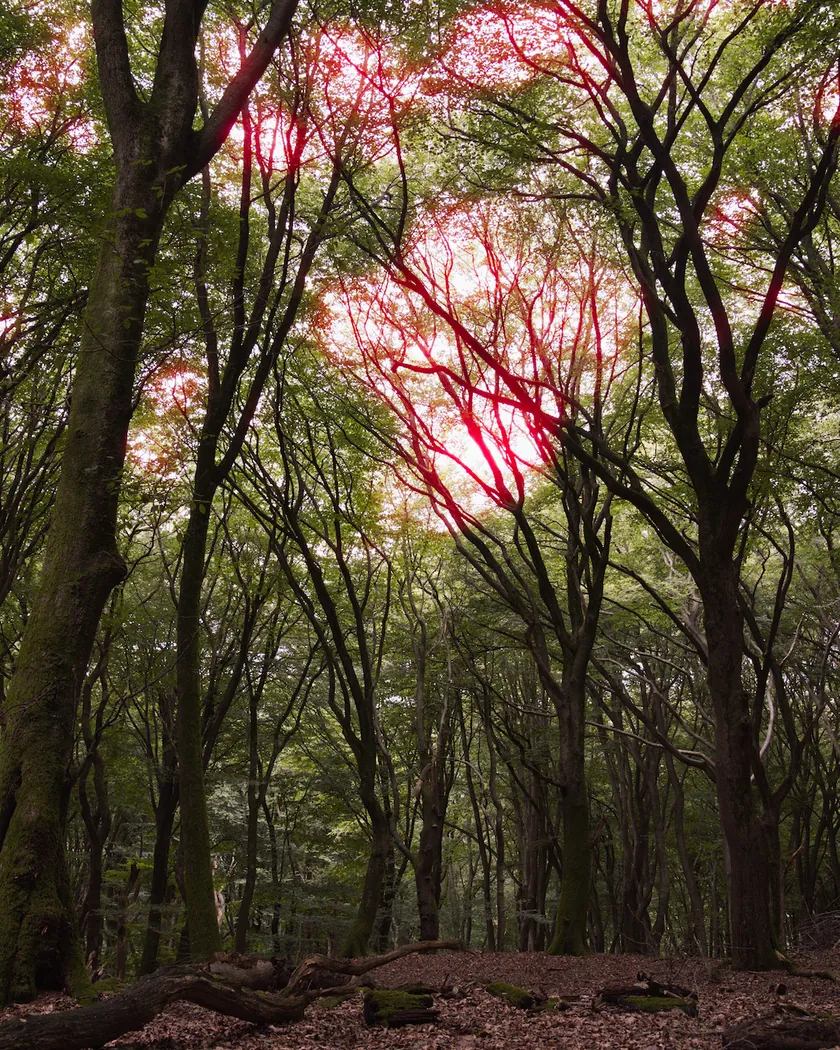
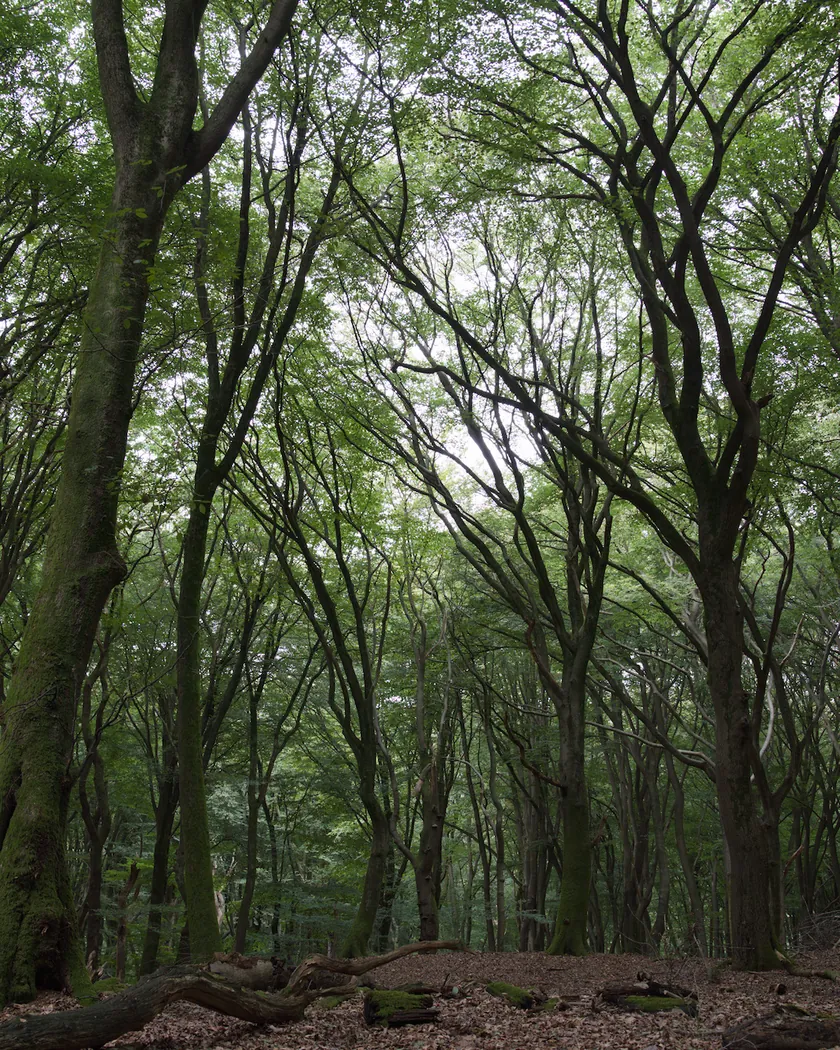
Translation into darktable
| Module | Role | Settings |
|---|---|---|
| blurs (halation) | A discreet halo around bright areas: half as strong and a little narrower than the Phoenix 200 style | Gaussian blur radius 150 px; blend mode RGB red channel, opacity 15 %; parametric mask of the Phoenix 200 style |
| rgb primaries | Slightly shifted colors (greens toward yellow, reds toward orange), less than the Phoenix 200 style; the blue offsets the drift toward violet of the rest of the chain | Green −0.04 rad, red +0.02 rad, blue −0.06 rad |
| color balance rgb (instance “film”) | Touches of pink in the midtones and green in the shadows, warm highlights; almost neutral saturation for the pastel look | Midtones 340° / 0.010, shadows 130° / 0.015, highlights 45° / 0.02; saturation +2 %, vibrance +0.03 |
| color equalizer | Pastel tendency, magentas kept; skin and greens a little toward yellow, bluer tones lighter | Saturation orange ×0.95, green ×0.92, blue ×0.95, magenta ×1.05; hue orange +3°, green −4°; brightness blue ×1.03 |
| tone curve (RGB, per channel) | Slope about 1.15 in the midtones (1.5 for the Phoenix 200 style); blacks and whites kept | Nodes (0, 0.01) (0.1, 0.065) (0.2, 0.16) (0.35, 0.315) (0.5, 0.5) (0.65, 0.68) (0.8, 0.835) (0.9, 0.925) (1, 0.985) |
| grain | Finer than the Phoenix 200 style (2400 / 36), but still marked | Coarseness 2000, strength 28, midtones bias 70 |
Measurements
The measurements come from a few test photos of our own, which are not published on this site. The photos shown here are different.
| Photo | Zone | Baseline | Metric | Before | After | Film expectation |
|---|---|---|---|---|---|---|
| 1014 | whole image | Base rendering | Lsd (contrast) | 30.7 | 32.8 | More normal contrast than Phoenix (Harman): firmer than the base render, well below the Phoenix 200 style (36.5) |
| 1014 | whole image | Base rendering | L5 (blacks) | 2.6 | 2.3 | Blacks kept (Phoenix 200 style: 0.6) |
| 1014 | whole image | Base rendering | L95 (whites) | 87.9 | 90.7 | Highlights kept (Phoenix 200 style: 95.8) |
| 1014 | whole image | Base rendering | C (chroma) | 8.6 | 11.1 | Moderate saturation (Phoenix 200 style: 13.8) |
| 0775 | whole image | Base rendering | Lsd (contrast) | 14.3 | 16.9 | Firmer than the base render, less than the Phoenix 200 style (20.8) |
| 0775 | whole image | Base rendering | L5 (blacks) | 29.4 | 26.1 | Shadows readable, not lifted (Phoenix 200 style: 17.9) |
| 0775 | whole image | Base rendering | L95 (whites) | 75.2 | 79.4 | Whites kept (Phoenix 200 style: 84.1) |
| 0775 | sky | Base rendering | C (chroma) | 27.5 | 26.1 | Pastel: sky loses 5 % of chroma (Phoenix 200 style: 35.1) |
| 0775 | sky | Base rendering | h (hue, °) | 273.6 | 280.6 | Drift toward violet: pink touches and purplish base go that way (Phoenix 200 style: 277.5) |
| 0775 | sea | Base rendering | L (lightness) | 38.4 | 37.1 | Kept (Phoenix 200 style: 29.9) |
| 0989 | skin | Base rendering | L (lightness) | 78.2 | 80.5 | Kept (Phoenix 200 style: 85.9) |
| 0989 | skin | Base rendering | C (chroma) | 16.4 | 20.0 | Moderate saturation: +22 % (Phoenix 200 style: 24.8, +51 %) |
| 0989 | skin | Base rendering | h (hue, °) | 44.2 | 41.8 | Colors less shifted: skin stays near its base hue (Phoenix 200 style: 63.3) |
| 1014 | pink T-shirt | Base rendering | C (chroma) | 33.7 | 41.8 | Moderate saturation: +24 % (Phoenix 200 style: 52.4, +55 %) |
| 1014 | pink T-shirt | Base rendering | h (hue, °) | 358.8 | 2.8 | Pink no longer drifts toward orange: +4° (Phoenix 200 style: 16.9) |
| 1014 | sunlit ground | Base rendering | b* | -0.2 | 3.0 | Light warm cast (Phoenix 200 style: 11.7) |
| 1013 | arch (top strip) | Base rendering | L (lightness) | 5.3 | 3.6 | Blacks kept (Phoenix 200 style: 1.4) |
| 0989 | door under the white band | Base rendering | a* | 10.0 | 21.5 | Halation: without halo 12.4, Phoenix 200 style 39.8 |
| 0989 | door under the white band | Base rendering | h (hue, °) | 285.9 | 301.7 | Halation: without halo 288.5, Phoenix 200 style 327.7 |
Base rendering: darktable’s default processing of the RAW file, without the preset. Luminance conversion (black and white): the same photo converted with plain luminance weights, to isolate the effect of the film’s spectral sensitivity.
What the style changes
The style sets six darktable modules and aims at a toned-down Phoenix II: firm but not harsh contrast, moderate pastel-leaning color with touches of pink and green, a discreet halo around bright areas and marked but finer grain, as the datasheet and reviews describe on the Harman Phoenix II 200 film page. Figures come from renders made with darktable-cli 5.6.0 at 1000 px, measured in CIELab. No t3mujinpack reference exists for this film. The Phoenix 200 column below refers to the style of the first-generation film.
- Contrast. The tone curve has a slope of about 1.15 in the midtones, against 1.5 for the Phoenix 200 style. Contrast rises less than on the first version: Lsd +2.1 on photo 1014 and +2.6 on 0775, against +5.8 and +6.5. Blacks and whites are kept: L5 of 1014 is 2.3 (0.6 for the Phoenix 200 style), L95 is 90.7 (95.8), and the arch of 1013 reaches L 3.6 (1.4). Shadows stay readable without being lifted.
- Color. Colors move less: skin stays at h 42° (base 44°, Phoenix 200 style 63°) and the pink T-shirt drifts only +4° (against +18°). Saturation is moderate: skin +22 % and T-shirt +24 % (Phoenix 200 style: +51 % and +55 %). The sky loses 5 % of chroma and gets lighter (L 55.3 to 58.2), the pastel side that reviewers describe; that reading depends on the photo, because the base sky is already saturated. The sunlit ground gets a light warm cast: b* −0.2 to 3.0 (11.7).
- Pink and green touches. The color balance rgb instance named “film” adds pink to the midtones and green to the shadows, as reviews report, with warm highlights.
- Halation. The halo keeps the parametric mask of the Phoenix 200 style at 15 % opacity (30 % before). Under the white band of photo 0989, the blue door goes from a* 12.4 (style without halo) to 21.5 and from hue 288° to 302°; the Phoenix 200 style goes to 39.8 and 328°.
- Grain. Coarseness 2000 and strength 28, against 2400 and 36 for the Phoenix 200 style.
What it leaves alone
- Your base development. The style contains no exposure, no sigmoid or filmic, no white balance and no LUT.
- Your color balance rgb. The style’s instance is named “film” and is added next to yours.
- But not your tone curve, rgb primaries, color equalizer, blurs or grain. When you apply a style from the lighttable or the darkroom, each module replaces the instance of the same module with the same name, if the photo has one, and is added otherwise. Unnamed instances of these modules, or the “halation” blurs instance, may replace settings you made earlier; your earlier settings remain in the history.
- Your pipeline order. The style file carries no module order list.
Exporting with a style, or rendering with darktable-cli, adds every module of the style as a separate instance. Our measurements were made that way, on darktable’s default rendering. Details in Install and apply darktable styles.
Limits
- An interpretation, not an emulation. The datasheet gives no characteristic curve and no granularity: contrast and grain are set from qualitative descriptions, with Harman’s own comparison (“more normal”, “finer”) as the only relative measure.
- The one-stop figure is not Harman’s. “About one stop more” latitude comes from a reader comment, not from the datasheet.
- Pink and green touches vary. Sources describe subtle, pastel colors; how far the pink and green touches go depends on the scan and the exposure. The style gives an average version, and the green in the shadows is too weak to measure.
- Blues drift toward violet. The sky and sea hues move by +7° and +11°, more than on the Phoenix 200 style (+4°) despite a blue correction. We kept it: it matches the sources (pink touches, purplish base).
- Halation is approximate. The “RGB red channel” blend mode gives a red halo, not an orange one; small bright sources produce none; thresholds depend on your base exposure. To reduce it, lower the opacity of the “halation” blurs instance or switch it off.
- Grain is set by eye. The finer grain cannot be measured here, and the module does not reproduce the “blocky” look that reviewers see at small sizes.
Tips
- Expose for the midtones. Harman advises EI 100 to 200 and warns that underexposure loses the film’s character.
- Tame the halo. Lower the “halation” opacity, or disable that instance, for scenes with large bright areas.
- Apply it early. Apply the style before fine-tuning the tone curve, rgb primaries, color equalizer or grain, because it would replace those settings.
- Everything stays editable. Each module is an ordinary instance you can adjust or switch off afterwards.
- Installation: see Install and apply darktable styles.
Get the preset
GA — 054 / P · darktable preset
Phoenix II 200
for darktable