darktable preset inspired by FujifilmSuperia 200
Vivid reds and blues, blue-green shadows, slightly pink skin and moderate grain.
- Film
- GA — 051 · sheet, datasheet, sources
- Pack
- Full pack
- darktable
- 5.6 or later
- In darktable
- Styles › Pellicules › Couleur
- File
- Pellicules - Couleur - Fujifilm Superia 200.dtstyle
A darktable 5.6 style built from the Fujifilm Superia 200 datasheet and reviews: native modules, no LUT, measured on real RAW files. In the full pack.
Translation into darktable
| Module | Role | Settings |
|---|---|---|
| rgb primaries | Purer greens, crisper reds, skies barely turned toward cyan | Green hue +0.04 rad, green purity 1.05, red purity 1.02, blue hue −0.02 rad |
| color balance rgb (instance “film”) | Blue-green shadows, very slightly cool highlights, vivid but not excessive color | Shadows 150° / 0.028, highlights 230° / 0.006; global saturation +0.04, vibrance +0.05 |
| color equalizer | Intense reds and greens, slightly denser blues, skin a little pinker | Red saturation ×1.08, green saturation ×1.12; blue brightness ×0.98; orange hue −10° |
| tone curve (RGB, per channel) | Medium-to-strong slope, short toe, no shoulder | Nodes (0, 0.012) (0.10, 0.07) (0.25, 0.22) (0.5, 0.505) (0.75, 0.79) (0.9, 0.925) (1, 0.985) |
| grain | Sized from a diffuse RMS granularity of 4 at ISO 200: finer than a 400-speed film, still present in the shadows | Coarseness 1150, strength 13, midtones bias 75 |
Measurements
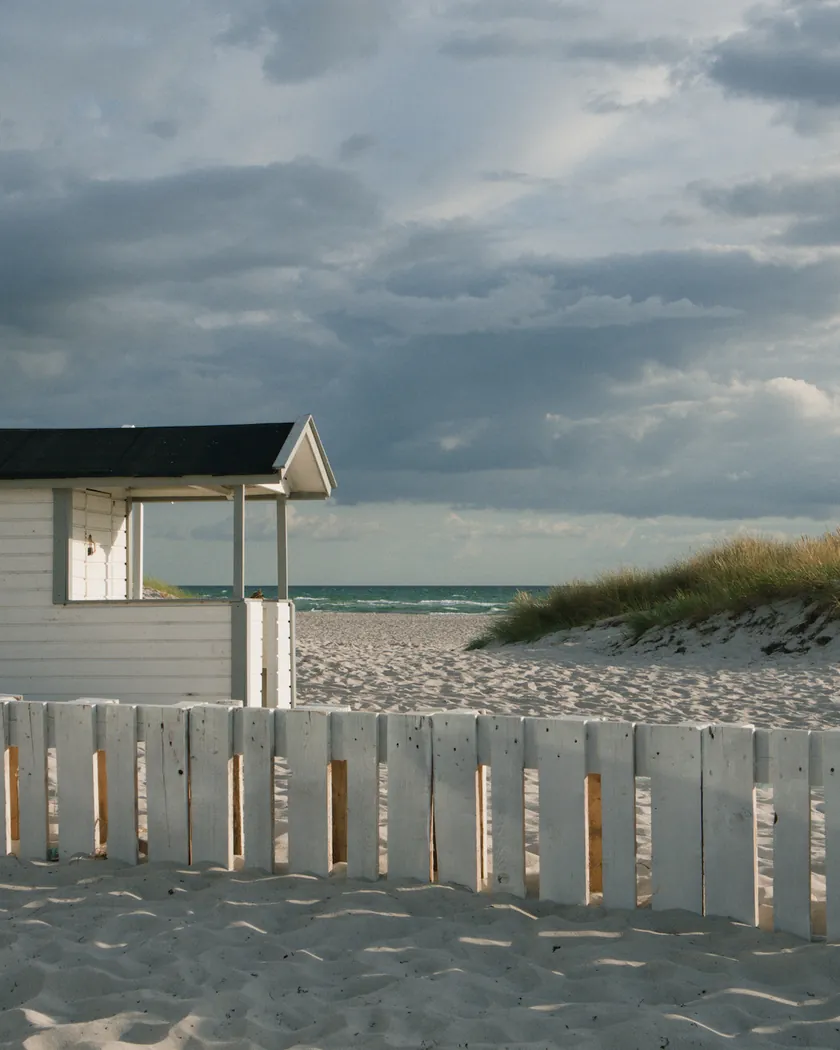
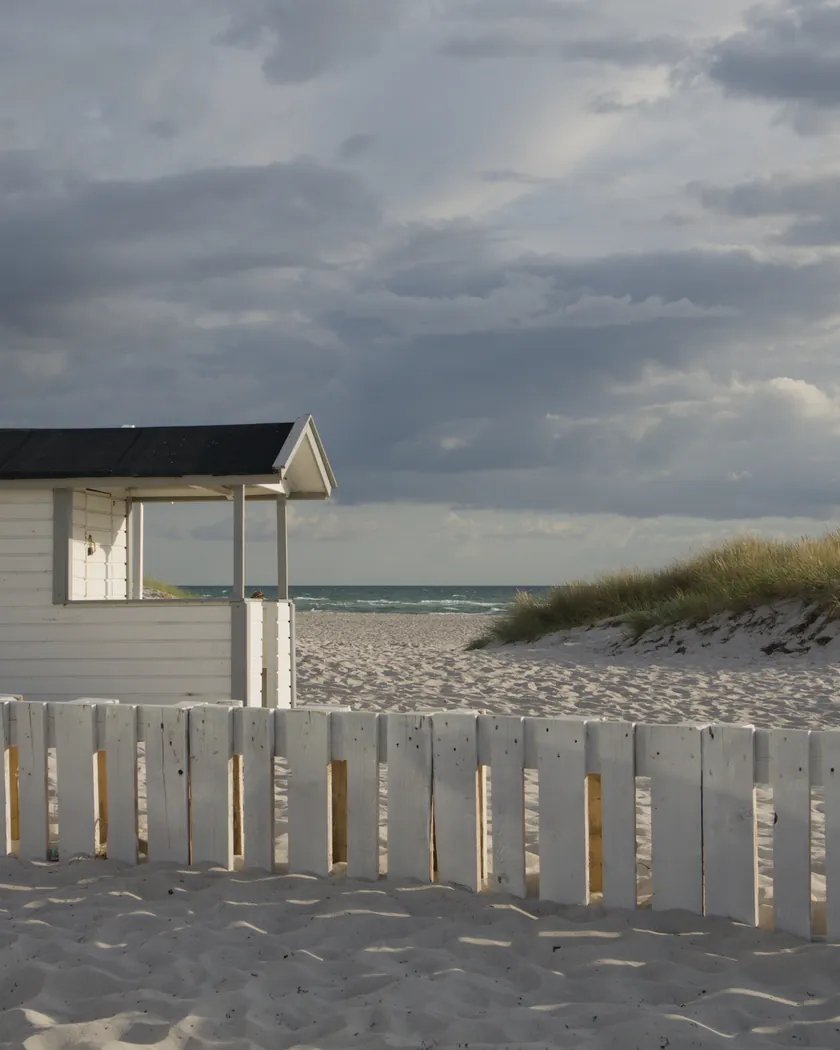
The measurements come from a few test photos of our own, which are not published on this site. The photos shown here are different.
| Photo | Zone | Baseline | Metric | Before | After | Film expectation |
|---|---|---|---|---|---|---|
| 0775 | whole image | Base rendering | L (mean lightness) | 53.2 | 54.1 | No specific target |
| 0775 | whole image | Base rendering | Lsd (contrast) | 14.3 | 16.2 | Medium to strong contrast: higher |
| 1014 | whole image | Base rendering | Lsd (contrast) | 30.7 | 32.8 | Medium to strong contrast: higher |
| 1014 | whole image | Base rendering | L5 (blacks) | 2.6 | 2.6 | Short toe: blacks unchanged |
| 1014 | whole image | Base rendering | L95 (whites) | 87.9 | 90.9 | No shoulder: whites open up |
| 0775 | sky | Base rendering | C (chroma) | 27.5 | 31.5 | Intense blues: about 15 % more saturated |
| 0775 | sky | Base rendering | h (hue, °) | 273.6 | 267.2 | Blues turned slightly toward cyan |
| 0775 | sea | Base rendering | C (chroma) | 22.2 | 25.1 | Intense blues: about 13 % more saturated |
| 0775 | sea | Base rendering | h (hue, °) | 270.1 | 258.3 | Blues turned toward cyan |
| 0989 | skin | Base rendering | C (chroma) | 16.4 | 17.4 | Slightly more saturated skin |
| 0989 | skin | Base rendering | h (hue, °) | 44.2 | 40.7 | Slightly pinker skin (sources disagree) |
| 1014 | pink T-shirt | Base rendering | C (chroma) | 33.7 | 39.7 | Vivid reds and magentas: about 18 % more saturated |
| 1014 | pink T-shirt | Base rendering | h (hue, °) | 358.8 | 0.9 | Hue unchanged |
Base rendering: darktable’s default processing of the RAW file, without the preset. Luminance conversion (black and white): the same photo converted with plain luminance weights, to isolate the effect of the film’s spectral sensitivity.
What the style changes
The style sets five darktable modules. It aims at a vivid, contrasty Superia 200: intense reds, greens and blues, blue-green shadows, a slightly pink skin tone and moderate grain, as the datasheet and the few reviews describe on the Fujifilm Superia 200 film page. All figures below come from renders made with darktable-cli 5.6.0 at 1000 px, measured in CIELab.
- A medium-to-strong tone curve. The curve has a short toe and no shoulder, which is how the datasheet’s characteristic curves read. Contrast goes up (Lsd 14.3 → 16.2 on photo 0775, 30.7 → 32.8 on photo 1014), the darkest 5 % stay where they were (L5 2.6 → 2.6) and the whites open up (L95 87.9 → 90.9). That is a little more than our Fujifilm Superia X-TRA 400 style (+1.6 Lsd).
- Intense blues. Sky chroma rises from 27.5 to 31.5 (+15 %) and sea chroma from 22.2 to 25.1 (+13 %). Both turn toward cyan: the sky hue moves from 273.6° to 267.2°, the sea from 270.1° to 258.3°. Saturation is stronger than on the X-TRA 400 style (+8 % on the sky), and the sea turns further toward cyan (−12° against −6°).
- Vivid reds and magentas. The color equalizer raises red saturation by 8 % and green by 12 %. The pink T-shirt on photo 1014 gains 18 % chroma (33.7 → 39.7) with its hue unchanged.
- Slightly pinker skin. Skin hue moves from 44.2° to 40.7° and its chroma from 16.4 to 17.4 (+6 %). The change is modest on purpose: the sources disagree about Superia 200 skin, as the film page explains.
- Blue-green shadows come from the “film” color balance rgb instance, with cool highlights barely touched. There is no magenta in the midtones, which is a difference from the X-TRA 400 style.
- Moderate grain, sized from the datasheet’s diffuse RMS granularity of 4.
For comparison, the t3mujinpack Superia 200 style, rendered on the same files, keeps the sky hue and desaturates it slightly (C 26.6 against 27.5), which runs against the reviews. It also lightens the image strongly (L +5.4 on photo 0775) and makes skin pinker than this style does (h 37.3° against 40.7°).
What it leaves alone
- Your base development. The style contains no exposure, no sigmoid or filmic, no white balance and no LUT. Those settings stay as you made them.
- Your color balance rgb. The style’s color balance rgb is a separate instance named “film”: it is added next to yours, which stays untouched.
- But not your rgb primaries, color equalizer, tone curve or grain. When you apply a style from the lighttable or the darkroom, each of its modules replaces the instance of the same name if the photo has one, and is added otherwise. The style’s rgb primaries, color equalizer, tone curve and grain carry no instance name, so they replace any settings you had already made in those modules. Your earlier settings remain in the history.
- Your pipeline order. The style file carries no module order list, so it does not impose one on your image.
Exporting with a style, or rendering with darktable-cli, works differently: every module of the style is added as a separate instance. Our measurements were made that way, on darktable’s default rendering. The details are in Install and apply darktable styles.
Limits
- An interpretation, not a calibration. The style is built from Fujifilm’s datasheet and a handful of reviews. No film was scanned or measured to tune it.
- Thin review base. The reviews we could use are few and describe individual rolls, not measurements. Two of them concern the later Fujicolor C200 and Fujifilm 200, not Superia 200 itself.
- The sources contradict each other on skin (pink or natural) and on shadows (green or not). The style takes the pink skin and blue-green shadows with reservations, and the blue-green shadows barely show on our test renders because the tint is multiplicative.
- The curve slope is read from a graph and remains approximate.
- Greens were not checked. The four test photos contain little vegetation, so the intense greens were not measured, and no color chart was used.
- Under- and overexposure are not simulated: the nearly matte look and green shadows of underexposure, and the pink cast of overexposure, are left out.
Tips
- Apply it early. If you plan to fine-tune the tone curve, rgb primaries, color equalizer or grain yourself, apply the style first: it would replace those settings if you made them before.
- Everything stays editable. Each module the style sets is an ordinary module instance: you can adjust it or switch it off afterwards, for example the grain strength or the “film” color balance rgb.
- If skin looks too pink for your taste, lower the color equalizer’s orange hue shift or its red saturation: both are ordinary settings, and the film’s skin rendering is itself disputed.
- Installation: see Install and apply darktable styles.
Get the preset
GA — 051 / P · darktable preset
Superia 200
for darktable