LomographyRedscale XR 50-200
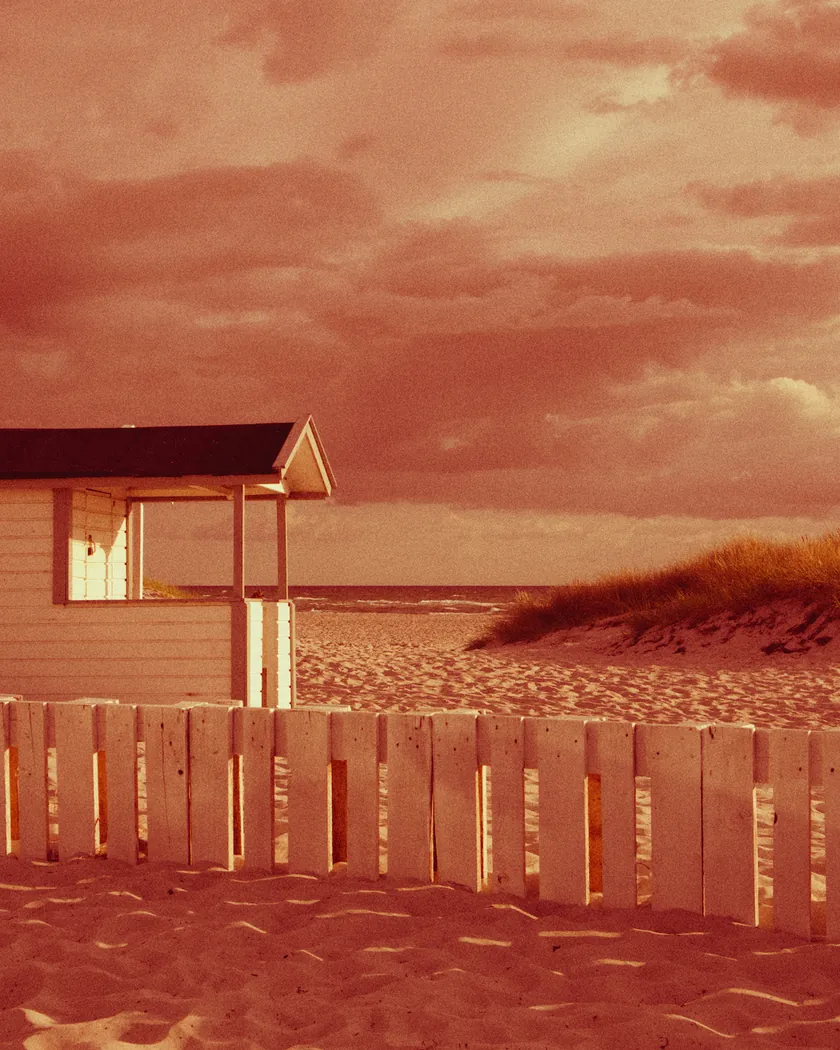
Strong red-orange cast, as if a red filter were on the lens (Farace); mix of reds, oranges and yellows at ISO 100 (Analogue Wonderland)
- Manufacturer
- Lomography
- ISO
- 50-200
- Type
- Effects
- Process
- C-41
- Formats
- 135, 120, 110
- Status
- In production
- Datasheet
- None published
- Preset
- GA — 060 / P
Status checked [1]

Character
- Contrast
- No curve published; 'too low in contrast' at ISO 200 (Unique Photo); shadows 'muddy' (Grey)
- Grain
- 'Small but noticeable' on underexposed frames (Farace); prominent in 35 mm at night (35mmc)
- Latitude
- Sold as 'XR' with an ISO 50–200 range; the rating changes the strength of the cast
- Best for
- Direct light and flash; dim scenes and night shots per reviewers
Lomography Redscale XR is a color negative film for standard C-41 processing that produces red-orange images on purpose. It is sold with an ISO 50–200 range, and the ISO you set on the camera changes how strong the cast is [1] [4]. It is a redscale film, exposed through its base rather than its front. It is not the same product as Harman Red 125, another redscale film.
Look and color
Lomography publishes no data on the cast, so the descriptions below come from reviews.
- Strong red-orange cast. Jim Grey shooting at ISO 100 got “mighty, mighty red images” [2]. Joe Farace describes a red-orange cast “similar to placing a red filter on the lens” [3] and found it as intense as he could want.
- Why it happens. Light passes through the non-emulsion side of the film first [5] [4]. Analog.cafe explains that the red-sensitive layer then faces the lens and the blue-sensitive layer sits at the back, so blue is weakened [6].
- The ISO changes the strength. More light means less effect.
- Shadows redder than highlights. Analogue Wonderland found little effect in brightly lit areas and strong red in dark ones, especially with flash, which it recommends in low light such as parties or gigs [4].
- Hard to fix afterwards. Jim Grey and Joe Farace both found the cast difficult to correct in post-processing [2] [3].
- Skin. The sources read do not describe skin tones.
- Night. For 35mmc, low light tempers the red saturation, giving warm reds, oranges and yellows with deep blacks [7].
Tonality
- No published curve. No datasheet was found.
- Low contrast at ISO 200. Unique Photo found ISO 200 “too low in contrast” and recommends ISO 100 [5].
- Muddy shadows. Jim Grey found shadows “muddy and underexposed” when the light was not direct and bright [2]. The 35mmc author also found shadows muddy in 35 mm [7].
- The box range is optimistic, per one reviewer. Joe Farace found ISO 200 gave negatives underexposed by at least half a stop and advises ISO 100, or ISO 50 for a “heavier negative” [3].
- Reviewers pick different ratings. Jim Grey used ISO 100 [2], Unique Photo prefers 100 [5], Analogue Wonderland suggests 100 as a starting point [4], and the 35mmc author rated it at 160 [7]. Analog.cafe notes that with redscaled film there is “no specific rule” for the exposure change, but suggests about one stop more light [6].
Grain and sharpness
No granularity figure is published.
- Visible grain. Joe Farace saw “a small but noticeable amount of grain” in some frames, which he links to half a stop of underexposure at ISO 200 [3]. The 35mmc author found grain prominent in 35 mm and cleaner results in medium format [7].
- Noise in the shadows. Unique Photo saw “entirely too much cyan noise in the shadows” in ISO 200 scans [5]. Farace’s and Unique Photo’s frames were scanned, so the scanner may play a part; the sources do not separate the two.
- Sharpness. The sources read give no verdict on sharpness.
Specs
| Item | Value | Source |
|---|---|---|
| ISO speed | 50–200, chosen per roll | [1] |
| Process | Standard C-41 | [1] |
| 35 mm roll | 36 exposures | [2] |
| Datasheet | None found: no curves, no granularity, no spectral sensitivity |
Names, status and history
- Names. Lomography sells it as “Redscale XR” with an ISO 50–200 range; “XR” stands for extended range [1]. We found no rename or alternative name.
- Formats. Unique Photo lists 35 mm and 120 [5], Analogue Wonderland lists 35 mm, 120 and 110 [4]. A 35 mm roll gives 36 exposures [2].
- History. Unique Photo reviewed the film in January 2012 [5], so it has been sold for at least that long. We did not find a launch date.
- Who makes it. Lomography does not say who coats the film in the sources read.
- Status. On September 30, 2026, search listings showed the 35 mm and 120 versions in stock at Lomography’s shop [1]. The page itself returned HTTP 403 when we opened it, so this status is unconfirmed by a direct read.
- Not the only redscale film. Analog.cafe lists Harman Red 125, KONO! and others, and shows how to redscale a regular film by hand [6].
Alternatives
- GA — 059 Harman Red 125
Another factory redscale C-41 film (nominal ISO 125); the Grain Archive styles differ in contrast, blacks and grain, not in a separate spectral model
- GA — 026 LomoChrome Purple
Lomography's other color-effect film in C-41, ISO 100–400; it shifts hues instead of adding a single red cast
- GA — 039 LomoChrome Turquoise
Lomography's color-shift film that leans toward blue-green, the opposite side of the color wheel
- GA — 008 Kodak Gold 200
A regular C-41 film that photographers reverse-load by hand to get a redscale look; Analog.cafe suggests exposing it one stop lower
Get the look in darktable
The GA — 060 / P preset, inspired by Redscale XR 50-200, is a darktable 5.6 style of 4 native modules, with no LUT. It sits on top of your own exposure and tone mapping.
| Zone | Metric | Before → after |
|---|---|---|
| sky | C (chroma) | 27.5 → 49.8 |
| sea | C (chroma) | 22.2 → 54.0 |
| skin | L (lightness) | 78.2 → 78.2 |
Settings, all measurements and limits of the Lomography Redscale XR preset
GA — 060 / P · darktable preset
Redscale XR 50-200
for darktable
See real photos
Scans of real Redscale XR 50-200 film, published by others:
Questions about Redscale XR 50-200
What is Lomography Redscale XR?
A color negative film for standard C-41 processing that is sold with an ISO 50–200 range. It is a redscale film: the light reaches the emulsion through the tinted base first, which gives red, orange and yellow images. It is sold in 35 mm and 120, and reviewers also list 110.
What ISO should I shoot Redscale XR at?
Reviewers mostly advise ISO 100. Jim Grey shot it at 100; Joe Farace found 200 underexposed by at least half a stop and suggests 100 or 50; Unique Photo found 200 too low in contrast. One night shooter rated it at 160. At 50, the cast is milder; at 200, it is stronger.
What does redscale mean?
A film is redscaled when it is exposed through its base instead of its front. Analog.cafe explains that the red-sensitive layer then faces the lens and the blue-sensitive layer sits at the back, so the blue layer gets weakened and the picture turns red-orange. Lomography sells Redscale XR already reversed, ready to load like any roll.
Is Redscale XR the same as Harman Red 125?
No. Both are redscale C-41 films, but they are separate products. Harman Red 125 is a 2025 Harman film with a nominal ISO of 125. Redscale XR has an ISO 50–200 range that changes the cast, and reviewers describe low contrast and muddy shadows. We know of no data comparing the two emulsions.
Can I fix the red cast in editing?
Reviewers say it is hard. Jim Grey and Joe Farace both found the cast difficult to correct in post-processing, because the film does not record normal colors to begin with. The Grain Archive style gives a red-orange rendering in darktable rather than a way to remove the cast.
Sources
- 1M Lomography: Redscale XR 35 mm ISO 50–200, product page (listed as in stock in search results; the page itself returned HTTP 403 when opened) Accessed September 30, 2026.
- 2C Jim Grey: Shooting Lomography Redscale XR 50-200 (October 21, 2020) Accessed September 30, 2026.
- 3C Joe Farace: Film Friday review, Lomography Redscale XR film (May 20, 2022) Accessed September 30, 2026.
- 4C Analogue Wonderland: Film review, Lomography Redscale (Paul McKay, updated September 21, 2022) Accessed September 30, 2026.
- 5C Unique Photo: Lomography RedScale XR film review (Mike Zawadzki, January 26, 2012) Accessed September 30, 2026.
- 6C Analog.cafe: The Redscale Film Guide (Dmitri, April 1, 2025, updated April 23, 2025) Accessed September 30, 2026.
- 7C 35mmc: Lomography Redscale XR at night (fleetwoodler, January 30, 2025) Accessed September 30, 2026.
- 8B Grain Archive: Redscale XR style, measurements and limits
M: manufacturer · C: review or community · B: Grain Archive measurement