KodakPlus-X 125
Fine-grained, classic black and white with a wide range of middle grays
- Manufacturer
- Eastman Kodak
- ISO
- 125
- Type
- Black and white
- Process
- B&W
- Formats
- 135, 120, 220
- Status
- Discontinued (2011)
- Datasheet
- F-4018
- Preset
- GA — 067 / P
Status checked [2]
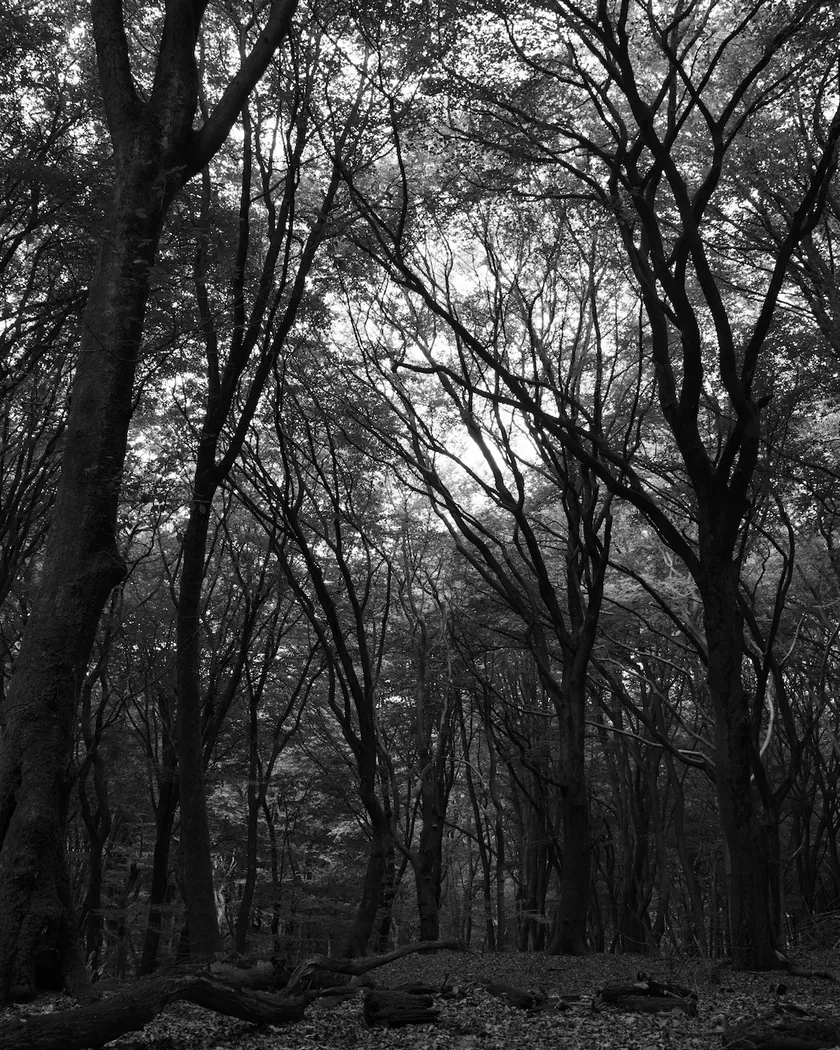
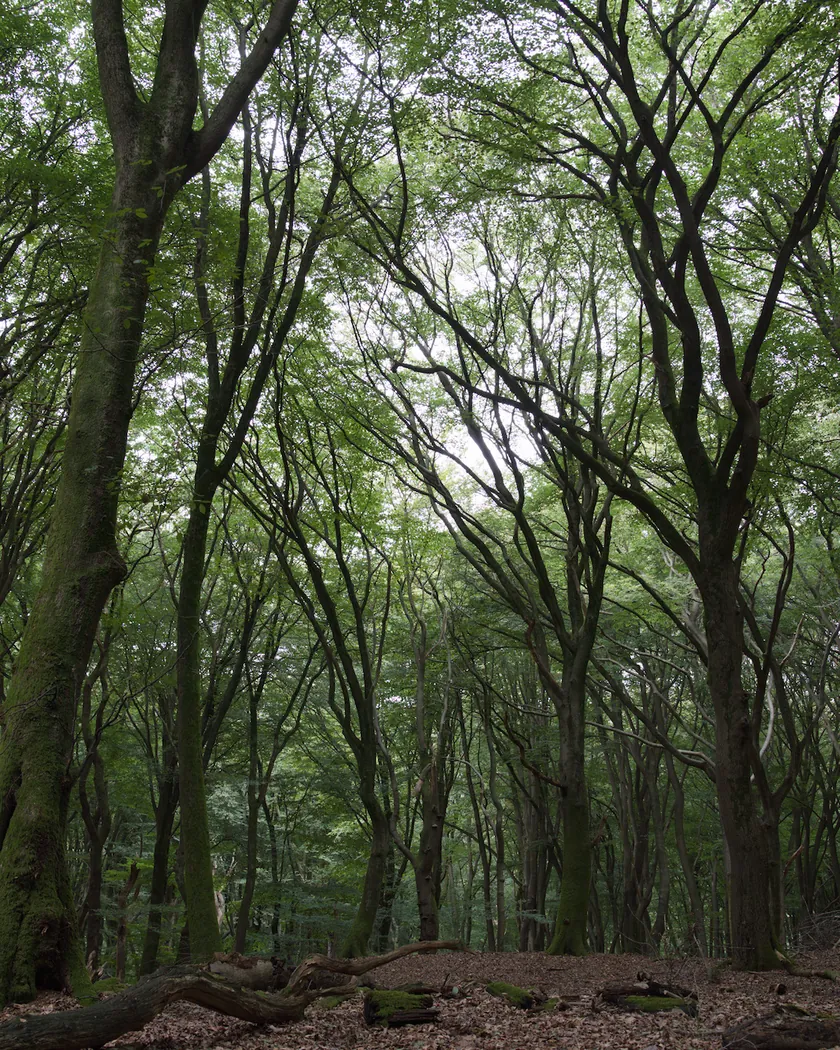
Character
- Contrast
- Moderate, set by development time; lower than T-Max 100 according to one review
- Grain
- Diffuse RMS granularity 10, rated 'extremely fine' (datasheet)
- Latitude
- One stop under at normal development; push to EI 500 or EI 1000
- Best for
- General-purpose outdoor or studio photography (Kodak)
Kodak Plus-X 125 is a medium-speed panchromatic black-and-white negative film with extremely fine grain, which Kodak pitched for general-purpose outdoor and studio work [1]. It descends from a motion-picture stock introduced in 1938 [2]. Kodak’s still version was reported discontinued in 2011, so it now survives only as expired film [2] [3].
Look and color
The datasheet describes the look in general terms: “rich tonality maintained with overexposure and underexposure” and “excellent sharpness” [1]. The reviews we read describe it in more detail:
- A “rich palette of middle grays” rather than punch, and a “creamy, dreamy quality” in even light, less at ease in harsh sun [6].
- “Perhaps like a finer grain Ilford FP4 Plus with a creamer look”, with lower contrast than T-Max 100. That review used expired film developed in Xtol [4].
- “Deep and mesmerizing” blacks, clean mids and highlights that are “not at all harsh” (Cockroft, film exposed at EI 80) [5].
- A long-time user calls it the “nicest combination of fine grain, beautiful tonality and ease of use” [3], but says FP4 Plus, the usual replacement, is “not quite as nice”.
None of the reviews we read describes how it turns colors into grays. Kodak’s daylight filter factors, if you want to darken skies, are ×2 for a No. 8 yellow, ×2.5 for a No. 15 deep yellow, ×6 for a No. 25 red and ×8 for a No. 58 green [1]. The Grain Archive style relies on the spectral curve alone: with it, a sky renders 5.5 L* lighter, skin 1.5 L* darker and a pink T-shirt 2.2 L* darker than in the base render [9].
Tonality
- Curve. On the datasheet’s characteristic curves (D-76, small tank, 20 °C), the toe is long and gentle. The gradient reads about 0.75 in the straight part for 7 minutes, and the curve is still rising at log H +0.6 (density about 2.2): there is no marked shoulder. This is our reading of the graph [1].
- Development sets the contrast. The datasheet plots 5, 7 and 11 minutes and a contrast-index chart for several developers [1]. One reviewer, using Ilfotec LC29 1+19 for 6 minutes, found “good latitude with a moderate amount of contrast” [2].
- Latitude. Kodak lists “wide exposure latitude” [1]:
- one stop under (EI 250) with normal development gives prints with a slight loss of shadow detail;
- two stops (EI 500) need a longer development, with more contrast and grain; EI 1000 is offered with a 3-stop push in XTOL.
- Long exposures. No correction from 1/100 to 1/10 s. From 1 s, add 1 to 3 stops and cut development by 10 to 30 % [1].
- Handling. One reviewer’s roll “curled something awful” after development and stayed under books for two days before scanning [5].
Grain and sharpness
| Film | Diffuse RMS granularity | Developer |
|---|---|---|
| Kodak Plus-X 125 | 10 [1] | HC-110 (B) |
| Kodak T-Max 100 | 8 [7] | D-76 |
| Ilford FP4 Plus (motion-picture version) | 10 [8] | Kodak D-96 |
- Kodak calls an RMS of 10 “extremely fine” [1]. RMS values measured in different developers are only roughly comparable. Ilford publishes no RMS for the still FP4 Plus, so the equal figure is indicative.
- Reviewers: “smooth, fine grain without appearing plastic” [5]; “impressed by the latitude and fine grain”, on expired film [4].
- Sharpness: Kodak lists “very high sharpness” and “high resolving power”. The table gives a resolving power of 125 lines per millimeter at a test-object contrast of 1000:1 and 50 at 1.6:1 [1].
Spectral sensitivity
On an equal-energy basis, the film is most sensitive in the violet, with a maximum at 408 nm, then declines to a shallow dip near 515 nm, holds a modest plateau from 550 to 625 nm and cuts off rapidly between 640 and 660 nm [1]. In practice, blue and violet render lighter than the eye sees them, and reds render darker than in a luminance conversion [9].
Datasheet digest
| Item | Value | Source |
|---|---|---|
| ISO speed | 125 (resolving-power table: 125 at a 1000:1 test-object contrast, 50 at 1.6:1) | [1] |
| Diffuse RMS granularity | 10, rated 'extremely fine' by Kodak (HC-110 dilution B, 5 min, 21 °C; net density 1.0, 48 µm aperture, 12×) | [1] |
| Characteristic curve | Long, gentle toe and no marked shoulder; contrast depends strongly on development time, 5, 7 and 11 min plotted (D-76, small tank, 20 °C; read from the graph) | [1] |
| Underexposure | 1 stop (EI 250) at normal development, with a slight loss of shadow detail | [1] |
| Push processing | Times published for EI 500 (2 stops); EI 1000 (3 stops) in XTOL | [1] |
| Reciprocity | No correction from 1/100 to 1/10 s; +1 stop at 1 s, +2 at 10 s, +3 at 100 s, with 10 to 30 % shorter development | [1] |
| D-76 stock, small tank, 20 °C | 5½ min (D-76 1:1: 8½ min; HC-110 B: 3½ min) | [1] |
| Filter factors, daylight | No. 8 yellow ×2, No. 15 deep yellow ×2.5, No. 25 red ×6, No. 58 green ×8 | [1] |
| Base | 135 and 35 mm long rolls: 5-mil gray acetate. 120 and 220: 3.6-mil acetate with a retouching surface | [1] |
Names, status and history
- 1938. Plus-X began as a Kodak motion-picture film in 1938, and was later sold for still cameras in several formats [2]. Its still speed reportedly went from 50 ASA to 80 in the 1950s, then 160 in 1960, before settling at ISO 125 for nearly fifty years [2].
- 125PX. Around 2006 the film was reformulated and given the code 125PX, with development times similar to its predecessor but 15 to 30 seconds different [2]. The 2007 datasheet covers both names, “Plus-X 125 Film / 125PX”, and notes that black-and-white film production was moving to a new coating facility, so processing times could differ slightly [1].
- 2010 and 2011. The motion-picture stock ended in 2010, and the still film was reported discontinued in 2011 [2] [3]. Reviewers call it Kodak’s last slow, traditional-grain black-and-white stock [5]. We found no Kodak announcement, only these secondary sources, so the exact date is unconfirmed.
- Formats. The 2007 datasheet lists 135, 35 mm long rolls, 120 and 220 [1].
- Datasheet. The most recent one we found is F-4018 from May 2007. It is hosted by 125px, not by Kodak [1].
Also sold as
- Kodak Professional Plus-X 125 / 125PX (the datasheet title; 125PX is Kodak's product code) (confirmed) [1]
Alternatives
- GA — 020 Ilford FP4 Plus
The usual substitute after 2011; same ISO 125 class. Reviewers describe it with a little more contrast and rich blacks, Plus-X with a creamier look
- GA — 047 Kodak T-Max 100
Kodak's remaining slow black-and-white film: RMS 8 against 10 on paper, and more contrast according to one review
- GA — 021 Ilford Pan F Plus 50
Ilford's ISO 50 black and white, 1⅓ stops slower, sold as extremely fine grain
- GA — 024 Fomapan 100 Classic
Budget cubic-grain ISO 100 black and white that is still in production
Get the look in darktable
The GA — 067 / P preset, inspired by Kodak Plus-X 125, is a darktable 5.6 style of 4 native modules, with no LUT. It sits on top of your own exposure and tone mapping.
| Zone | Metric | Before → after |
|---|---|---|
| sky | L | 55.3 → 60.8 |
| sea | L | 38.4 → 38.7 |
| skin | L | 78.2 → 76.7 |
Settings, all measurements and limits of the Kodak Plus-X 125 preset
GA — 067 / P · darktable preset
Plus-X 125
for darktable
See real photos
Scans of real Kodak Plus-X 125 film, published by others:
- Photo-Analogue: Kodak Plus-X, scans from several formats and cameras photo-analogue.blogspot.com
- Down the Road: Film nostalgia and Kodak Plus-X, expired-roll scans blog.jimgrey.net
- James Cockroft: Kodak Plus-X 125, review with scans jamescockroft.com
Questions about Kodak Plus-X 125
Is Kodak Plus-X still made?
No. Kodak's still version was reported discontinued in 2011, after the motion-picture stock ended in 2010, so only expired rolls circulate. The last datasheet we found, F-4018, dates from May 2007. Kodak's remaining slow black-and-white film is T-Max 100, and Ilford FP4 Plus is the usual ISO 125 alternative.
What ISO is Kodak Plus-X?
Plus-X 125 is rated ISO 125. One history says the film began at 50 ASA, rose to 80 in the 1950s and to 160 in 1960, then stayed at ISO 125 for nearly fifty years. Kodak's datasheet allows EI 250 at normal development and EI 500 with a push.
Is Plus-X finer grained than FP4 Plus?
Kodak rates Plus-X at diffuse RMS 10, 'extremely fine'. Ilford publishes no RMS for the still FP4 Plus, only 10 for its motion-picture version, in a different developer. Reviewers call Plus-X creamier, but the numbers do not show a difference.
What developer works with Plus-X 125?
Kodak lists times for D-76, HC-110, XTOL, T-Max and Microdol-X. In a small tank at 20 °C, D-76 stock takes 5½ minutes and HC-110 (B) 3½. Reviewers used other developers: Xtol on expired film and Ilfotec HC 1+31 for 5 minutes at EI 80. [1]
Can I use expired Plus-X film?
Reviewers still shoot expired rolls. One shot a bulk short end at ISO 100 and reported good latitude and fine grain; another used film that expired in 2009 and saw slight fogging in the first frames, which he blamed on loading. Results depend on storage, so test a roll.
Sources
- 1DS Kodak Professional Plus-X 125 Film / 125PX, technical data F-4018 (May 2007), copy hosted by 125px
- 2C Photo-Analogue: Kodak Plus-X (December 2016) Accessed September 30, 2026.
- 3C Mike Eckman: Keppler's Vault 33, Kodak Plus-X (March 2019) Accessed September 30, 2026.
- 4C Leica Blog: Kodak Plus-X 125 review, expired film Accessed September 30, 2026.
- 5C James Cockroft: Kodak Plus-X 125 (October 2017) Accessed September 30, 2026.
- 6C Down the Road: Film nostalgia and Kodak Plus-X (September 2025) Accessed September 30, 2026.
- 7DS Kodak Professional T-Max 100, technical data F-4016 (June 2018)
- 8DS Ilford: FP4 Plus negative motion picture film, fact sheet (undated), copy hosted by Bioskop Lab
- 9B The Grain Archive: Kodak Plus-X 125 style, validation measurements
DS: datasheet · C: review or community · B: Grain Archive measurement