IlfordFP4 Plus
Classic cubic grain, smooth gray transitions, firm midtones
- Manufacturer
- Harman Technology
- ISO
- 125
- Type
- Black and white
- Process
- B&W
- Formats
- 135, 120, sheet
- Status
- In production
- Datasheet
- FP4 Plus Technical Information
- Preset
- GA — 020 / P
Status checked [4]
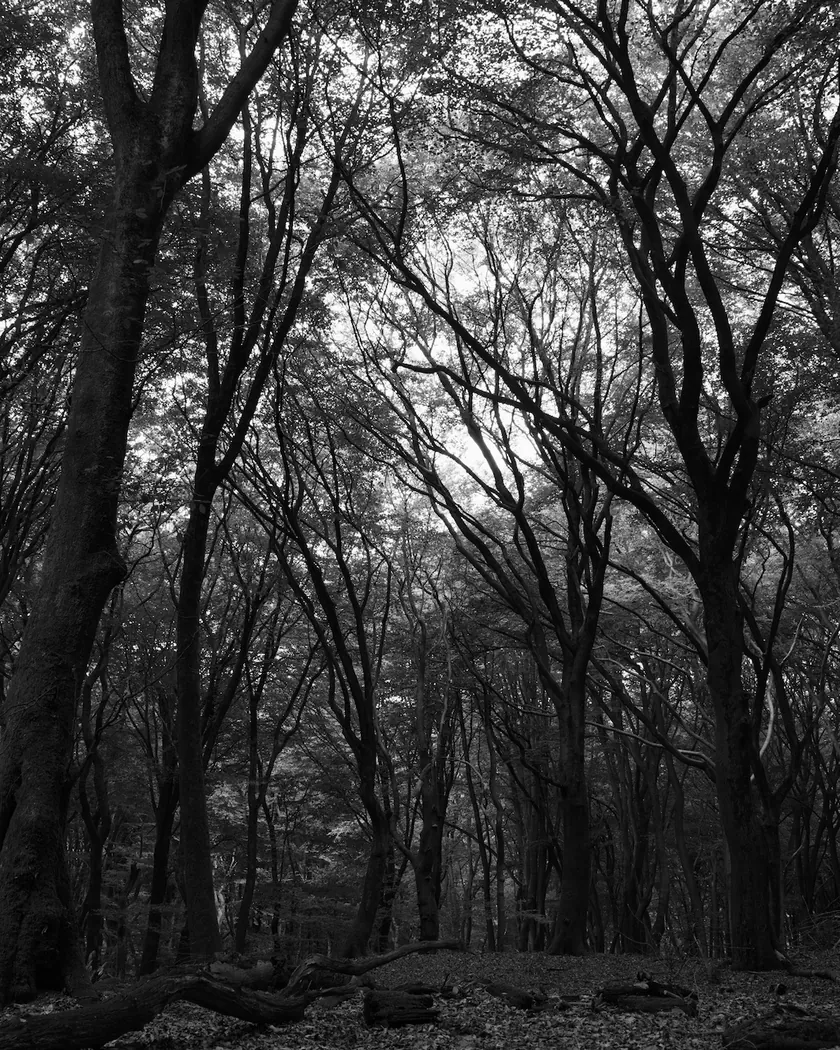
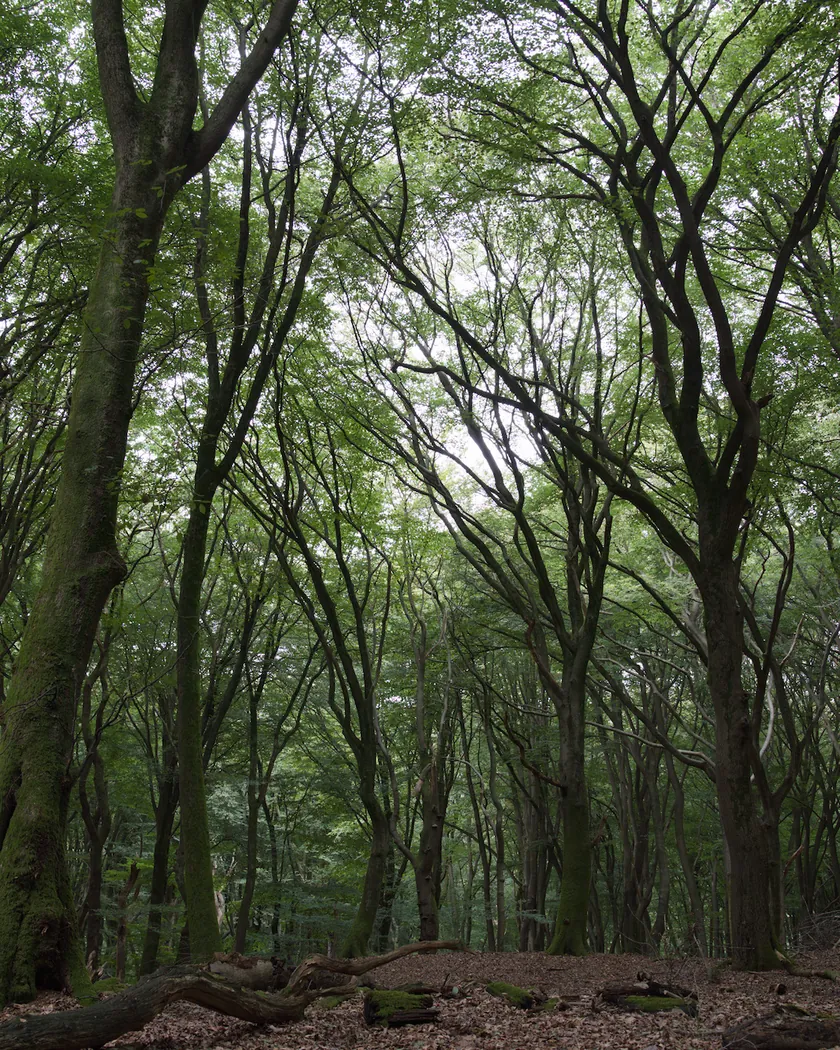
Character
- Contrast
- Medium (Ilford); reviews range from 'moderate' to 'dramatic'
- Grain
- No RMS for the still film; RMS 10 for its motion-picture version
- Latitude
- 2 stops under to 6 stops over (Ilford); EI 50 to 200 at normal quality
- Best for
- Portraits, landscapes, architecture, big enlargements (Ilford)
Ilford FP4 Plus is an ISO 125 black-and-white negative film with a traditional cubic-grain emulsion, made by Harman Technology in England and developed in standard black-and-white chemistry [1] [5]. Ilford sells it as fine-grained, of medium contrast and with wide exposure latitude [1] [4]. The FP line dates from 1935; FP4 arrived in 1968 and FP4 Plus in 1990 [10] [11].
Look and color
FP4 Plus turns colors into grays according to its own spectral sensitivity, not the eye’s:
- Blue renders lighter, skin and reds darker. Converting our test RAW files with the FP4 Plus curve instead of plain luminance made a sky 3.6 L* lighter, skin 4.6 L* darker and a pink shirt 1.8 L* darker [16].
- Less blue than HP5 Plus. On Ilford’s charts, which use the same graduations, FP4 Plus is less sensitive than HP5 Plus in the violet and blue (0.39 against 0.68 at 400 nm) and peaks further toward the red, near 600 nm instead of 570 nm [1] [12]. In our conversion, skin darkens less than with HP5 Plus: −4.6 against −5.7 L* [16].
- Filters. The still-film datasheet refers to the filter maker’s factors [1]. The fact sheet of the motion-picture version gives daylight factors of 2 for a No. 8 yellow, 3 for a No. 21 orange and 6 for a No. 25 red [2].
- Reviews talk about texture rather than color: a “classic” look [9], “a more classic and textured look” than tabular-grain films [10].
Tonality
- Curve. On the datasheet curve (Ilfotec HC 1+31, 8 min), base plus fog sits near 0.1 and the toe spans about one log unit. The straight section rises at a gradient of about 0.8, then a clear shoulder starts near 3.3 on the relative log exposure axis and flattens around a density of 1.9 (our reading of the graph) [1]. HP5 Plus, in the same developer at its own recommended time, rises at about 0.65 with no shoulder up to a density of about 2.1 [12]. FP4 Plus has firmer midtones and more compressed highlights.
- Contrast. Ilford calls it “medium” [4], Film Processing “moderate” [7]. The Darkroom praises its “smooth tonal transitions” [6] and Emulsive its “long tonality” [5].
- The reviews disagree on how punchy it is.
- Shoot It With Film found the contrast “incredible”, “with deep blacks and plenty of details in the highlights” [9]; Blue Moon Camera describes “dramatic and deep shadows” [10].
- Analog.cafe found that its portrait scans “lacked tone variation in the mid-greys” [8].
- Emulsive explains part of the gap: cool, dilute developer with moderate agitation gives fine grain and shadow detail, warm and less dilute developer gives “fat grain and high contrast” [5].
- Latitude. Ilford promises usable results from 2 stops under to 6 stops over. Best results come at EI 125, and good ones from EI 50 to 200 with adjusted development [1].
- Long exposures: no correction from 1/10,000 to ½ s. Beyond that, Ilford’s graph follows adjusted time = metered time^1.26 [1].
Grain and sharpness
| Film | Diffuse RMS granularity | Developer |
|---|---|---|
| Fujifilm Acros 100 II | 7 [15] | Microfine |
| Ilford FP4 Plus (motion-picture version) | 10 [2] | Kodak D-96 |
| Fomapan 100 Classic | 13.5 [13] | Microphen |
| Kodak Tri-X 400 | 17 [14] | HC-110 (B) |
| Ilford HP5 Plus | not published [12] | – |
- The still-film datasheet gives no RMS figure and calls the grain “exceptionally fine” [1]. The value of 10 comes from the fact sheet of FP4 Plus negative motion picture film, developed in Kodak D-96 for 5½ min at 24 °C [2]. Values measured in different developers are only roughly comparable.
- Reviews: “fine yet still noticeable grain”, unlike “ultra-smooth” Delta 100 or T-Max 100 [6]; “cubic grain” [5]; “very soft and pleasant” [9]. Film Processing finds it finer than HP5 Plus, which has “more pronounced grain” [7].
- Sharpness: Ilford publishes no resolving power [1]. Emulsive praises “outstanding sharpness and high acutance” [5] and Analog.cafe calls it “very sharp” [8], while Shoot It With Film finds it less sharp than Delta 100 [9].
Spectral sensitivity
Ilford publishes a wedge spectrogram made under 2850 K tungsten light. The curve climbs from about 365 nm, levels off between 465 and 485 nm, dips slightly near 505 nm, peaks around 600 to 610 nm and falls steeply past 630 nm [1]; the 2001 edition prints the same curve [3]. Tungsten light is much richer in red than in blue, which lifts the right side of the chart. Once that is corrected, blue skies still render lighter and skin darker than in a luminance conversion [16].
Datasheet digest
| Item | Value | Source |
|---|---|---|
| ISO speed | 125/22° in daylight (ID-11); EI 50 to 200 recommended from practical tests | [1] |
| Diffuse RMS granularity | Not given for the still film. 10 for FP4 Plus motion picture film (Kodak D-96, 5½ min at 24 °C) | [2] |
| Characteristic curve | Base plus fog about 0.1, toe about 1 log unit, gradient about 0.8, shoulder from about 3.3 relative log H, top near D 1.9 (Ilfotec HC 1+31, 8 min; read from the graph) | [1] |
| Exposure latitude | Usable results from 2 stops under to 6 stops over | [1] |
| Reciprocity | No correction from 1/10,000 to ½ s; longer: adjusted time = metered time^1.26 | [1] |
| D-76 stock, 20 °C, EI 125 | 8 min (ID-11 stock 8½, Ilfotec DD-X 1+4 10, HC-110 B 9) | [1] |
| Filter factors, daylight | No. 8 yellow ×2, No. 21 orange ×3, No. 25 red ×6 (motion picture fact sheet) | [2] |
| Base | 35 mm: 0.125 mm acetate. 120: 0.110 mm acetate and sheets: 0.180 mm polyester, both with anti-halation backing | [1] |
| Resolving power | Not given | [1] |
Names, status and history
- 1935 to 1990. FP stood for Fine grain Panchromatic and dates from 1935. Wikipedia lists FP2 (1939) and FP3 (1942) before FP4 in 1968 and FP4 Plus in 1990 [11] [10].
- Maker. The datasheet is published by Harman Technology, in Mobberley, England [1].
- Formats. On September 29, 2026, Ilford’s product page listed FP4 Plus in 35 mm, 120 and sheet film [4]. The datasheet details 35 mm cassettes of 24 and 36 exposures, 17 m and 30.5 m bulk lengths, 120 rolls and sheets [1]. The 2001 fact sheet also listed 220 rolls [3].
- Motion-picture version. Ilford has also published a fact sheet for FP4 Plus negative motion picture film in 35 mm and 16 mm, rated EI 125 in daylight and EI 100 under 3200 K tungsten light [2].
- Datasheet. The current still-film datasheet is dated November 2018 [1].
Alternatives
- GA — 001 Ilford HP5 Plus
Ilford's ISO 400 classic: 1⅔ stops faster, grainier according to reviews, with a flatter curve and no shoulder on the datasheet
- GA — 080 Ilford Delta 100 Professional
Ilford's tabular-grain ISO 100: smoother and sharper than FP4 Plus according to reviews
- GA — 021 Ilford Pan F Plus 50
Same maker, 1⅓ stops slower, sold as 'high contrast' with extremely fine grain
- GA — 024 Fomapan 100 Classic
Budget cubic-grain ISO 100: RMS 13.5 on paper, and more contrasty with crushed shadows according to reviews
Get the look in darktable
The GA — 020 / P preset, inspired by Ilford FP4 Plus, is a darktable 5.6 style of 4 native modules, with no LUT. It sits on top of your own exposure and tone mapping.
| Zone | Metric | Before → after |
|---|---|---|
| sky | L (channel weights only) | 55.2 → 58.8 |
| skin | L (channel weights only) | 79.3 → 74.7 |
| pink T-shirt | L (channel weights only) | 47.8 → 46.0 |
Settings, all measurements and limits of the Ilford FP4 Plus preset
GA — 020 / P · darktable preset
FP4 Plus
for darktable
See real photos
Scans of real Ilford FP4 Plus film, published by others:
- The Darkroom: Ilford FP4 Plus 125 film review and customer photos thedarkroom.com
- Analog.cafe: Ilford FP4 Plus film review, with sample scans analog.cafe
- Blue Moon Camera: Ilford FP4 Plus film review with sample photos bluemooncameracodex.com
Questions about Ilford FP4 Plus
What ISO is Ilford FP4?
FP4 Plus has an ISO speed of 125/22° in daylight, measured by Ilford in ID-11 developer. Ilford gets its best results at EI 125 but says image quality stays good from EI 50 to EI 200, with adjusted development times. That range comes from practical tests, not from the ISO standard.
Can you push FP4 to 400?
Ilford's datasheet gives normal development times only up to EI 200. For film exposed at EI 400 or above by accident, it suggests 16 minutes in Microphen stock and warns that quality will be lower. Reviewers report pushing much further: Emulsive mentions up to six stops, around EI 8000.
Is Ilford FP4 C-41?
No. FP4 Plus is a traditional black-and-white negative film. Ilford's datasheet gives times only for black-and-white developers, such as ID-11, Ilfotec DD-X, Kodak D-76, HC-110 and Rodinal. A C-41 color line cannot process it; it needs a lab or a home setup that develops black-and-white film.
FP4 Plus vs HP5: which one?
FP4 Plus is ISO 125 with finer grain; HP5 Plus is ISO 400 and pushes to EI 3200. On Ilford's curves, FP4 Plus has firmer midtones (gradient about 0.8 against 0.65) and a shoulder that compresses highlights. Reviews call FP4 moderate in contrast and HP5 grainier and grittier. Ilford publishes no RMS figure for either still film.
What are the developing times for Ilford FP4 Plus 125?
At EI 125 and 20 °C with intermittent agitation, Ilford gives 8½ minutes in ID-11 stock, 8 in Kodak D-76 stock, 10 in Ilfotec DD-X 1+4, 9 in HC-110 dilution B, and 9 or 15 minutes in Rodinal 1+25 or 1+50. Reduce by up to 15 % with continuous agitation.
Sources
- 1DS Harman: FP4 Plus Technical Information (November 2018)
- 2DS Ilford: FP4 Plus negative motion picture film, fact sheet (undated), copy hosted by Bioskop Lab
- 3DS Ilford: FP4 Plus fact sheet (July 2001), copy hosted by mr-alvandi.com
- 4M Ilford Photo: FP4 Plus 35mm, product page Accessed September 29, 2026.
- 5C Emulsive: Film stock review, Ilford FP4 Plus in 35mm, 120 format and sheet film (EM, updated October 16, 2020) Accessed September 29, 2026.
- 6C The Darkroom: Ilford FP4 Plus 125 film review Accessed September 29, 2026.
- 7C Film Processing: Ilford FP4 vs HP5, when and which one to choose (August 16, 2024) Accessed September 29, 2026.
- 8C Analog.cafe: Ilford FP4 Plus film review (Dmitri, updated July 4, 2024) Accessed September 29, 2026.
- 9C Shoot It With Film: Ilford FP4 Plus black and white film review (James Baturin, January 13, 2023) Accessed September 29, 2026.
- 10C Blue Moon Camera: Film Friday, Ilford FP4 Plus film review (Zeb Andrews, February 20, 2026) Accessed September 29, 2026.
- 11C Wikipedia: Ilford FP Accessed September 29, 2026.
- 12DS Harman: HP5 Plus Technical Information (November 2018)
- 13DS Foma Bohemia: Fomapan 100 Classic, technical data (05/22)
- 14DS Kodak Professional Tri-X 320 and 400, technical data F-4017 (October 2021)
- 15DS Fujifilm: Neopan 100 Acros II (135), data sheet AF3-0258E (February 2020)
- 16B The Grain Archive: Ilford FP4 Plus style, validation measurements
DS: datasheet · M: manufacturer · C: review or community · B: Grain Archive measurement