FujifilmNeopan 400
Clean, silvery black and white with crisp whites and rich shadows, per reviews
- Manufacturer
- Fujifilm
- ISO
- 400
- Type
- Black and white
- Process
- B&W
- Formats
- 135, 120, 4x5
- Status
- Discontinued (2013)
- Datasheet
- AF3-706E
- Preset
- GA — 083 / P
Status checked [2]
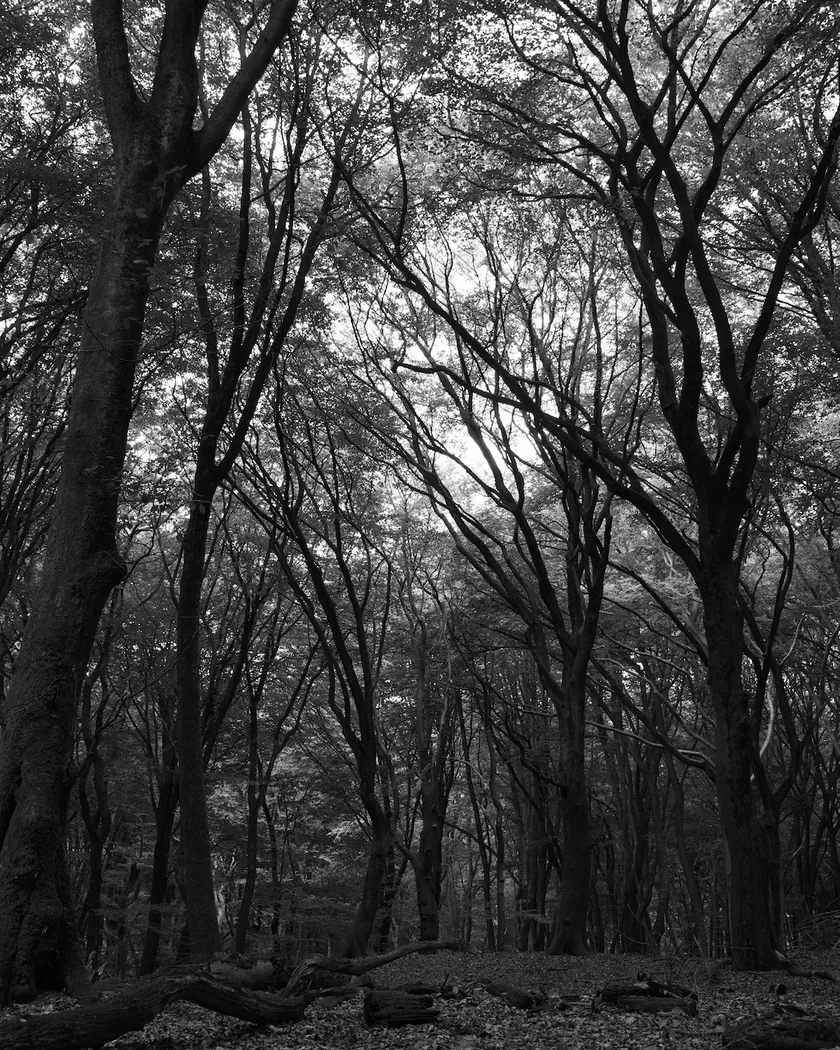
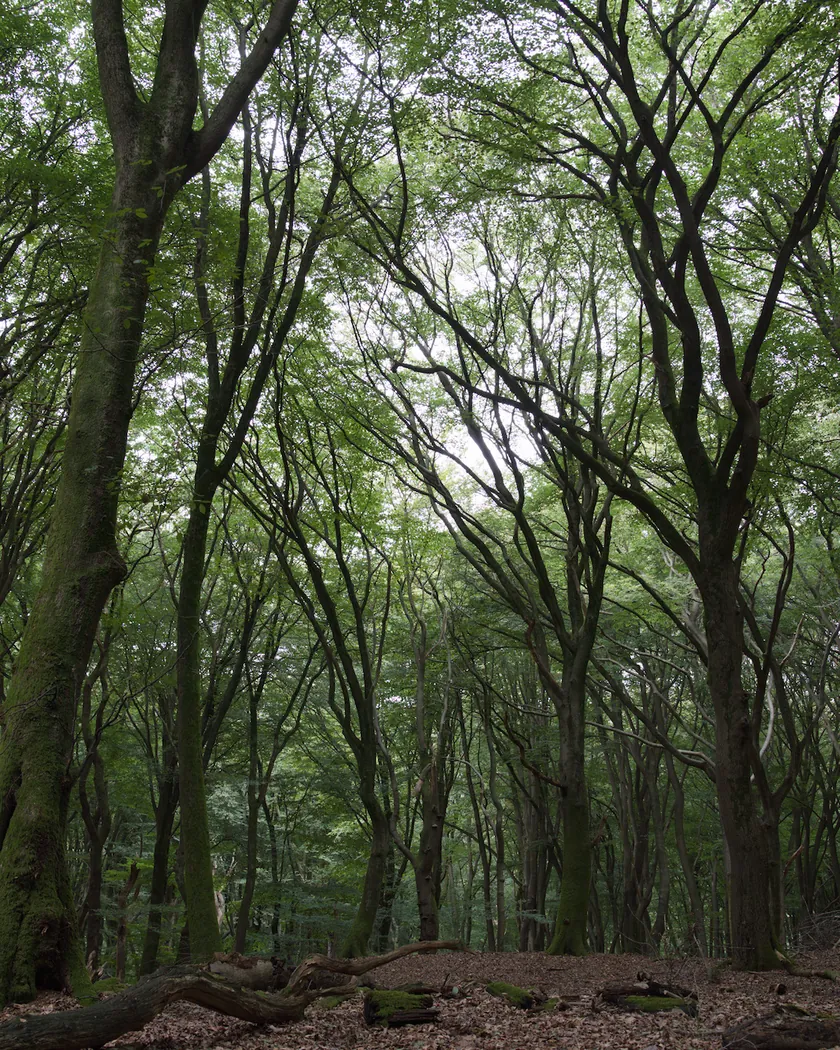
Character
- Contrast
- Medium to high in reviews; the datasheet curve for 7½ min in D-76 has a mean gradient of 0.54
- Grain
- 'Fine grain' (datasheet, no figure); reviewers call it clear but not intrusive
- Latitude
- Datasheet gives exposure guides at ISO 400 and at EI 1600, with development times up to EI 1600 (3200 in some developers)
- Best for
- Low light, action and news photography (Fujifilm)
Fujifilm Neopan 400 Professional is a discontinued panchromatic black-and-white negative film with an ISO speed of 400 [1]. It was introduced in 1978 and sold in Japan as Neopan 400 Presto [2]. Fujifilm aimed it at low light, action freezing and news photography, and its datasheet promises fine grain and high sharpness [1].
Look and color
The film converts colors to gray by its own sensitivity, which the 1999 datasheet plots as a spectrogram to daylight [1]:
- Blue is not held back. The curve is almost flat from 400 to 460 nm, so blue renders about as light as green and red. In our test renders with weights integrated from this curve, a sky measures L* 60.7, against 55.3 in the base rendering, and 58.6 with the Acros 100 II curve, where the blue is held back [10].
- Silvery and modern, per reviews. Canon Classics describes a “shimmery, silvery look” that is unlike vintage stocks such as Tri-X, and finds the tonality “somewhat similar” to Acros [5].
- Filters. For darker skies, the datasheet lists daylight filter factors of 2 for yellow, 4 for orange and 8 for red [1].
Tonality
- Curve. The datasheet publishes characteristic curves for D-76, SPD and T-Max at 20 °C. For D-76 at 7½ min (the time given for EI 400), the mean gradient is 0.54; it rises to 0.65 at 8¾ min and 0.83 at 12 min [1]. From the graph, base plus fog sits near a density of 0.2, the toe is gradual and the midtone slope regular, with no clear shoulder in the plotted range (our reading) [1].
- Reviews on contrast agree roughly. 35mmc describes “extreme highlights and shadows” and the “clearest white tones” [3]. Jim Grey, using Rodinal 1+50, says the contrast needed “a little boosting in post, but not much” [4].
- Shadows: reviews disagree. Canon Classics reports “massive shadow detail” [5]; Jim Grey finds the blacks rich but shadows that “tended to block up a little” [4]. Developer and exposure probably explain part of the gap.
- Push processing. Fujifilm says development efficiency was improved to increase push capability. It gives an exposure guide at EI 1600 and development times up to that speed in most developers [1].
Grain and sharpness
| Film | Diffuse RMS granularity | Developer |
|---|---|---|
| Fujifilm Neopan 400 | not published [1] | – |
| Kodak Tri-X 400 | 17 [7] | HC-110 (B) |
| Kodak T-Max 400 | 10 [8] | D-76 |
| Ilford HP5 Plus | not published [9] | – |
- The datasheet says “fine grain, high sharpness, and fine texture” but gives no RMS, no grain index and no resolving power [1]. Its grain cannot be ranked against the Kodak figures on paper.
- Reviews: grain “clear, but without being intrusive” [3]; “well controlled”, visible at full scan size but hard to see at blog dimensions [4]. These are opinions, not measurements.
- The datasheet also notes resistance to static marks and smooth transport in the camera [1].
Spectral sensitivity
On the daylight spectrogram, sensitivity is nearly level from 400 to 460 nm, dips by about 0.17 log near 505 nm, reaches a second broad maximum near 585 nm, then falls steeply at about 650 nm [1]. In practice, blue skies and skin tones sit closer together in gray than on Acros 100 II, whose curve holds the blue back. The curve is not equal-energy: it is measured against daylight at 5400 K.
Datasheet digest
| Item | Value | Source |
|---|---|---|
| ISO speed | 400/27° | [1] |
| Color sensitivity | Panchromatic | [1] |
| Granularity | Not published (the datasheet says 'fine grain' and 'high sharpness') | [1] |
| Base | Gray-tinted triacetate: 0.122 mm (135), 0.104 mm (120) | [1] |
| D-76 stock, small tank, 20 °C | 7½ min at EI 400; 13½ min at EI 1600 | [1] |
| Mean gradient (Ḡ), D-76, 20 °C | 0.54 at 7½ min; 0.65 at 8¾ min; 0.83 at 12 min (read from the datasheet curves) | [1] |
| Filter factors, daylight | Yellow (Kodak No. 8) ×2, orange (No. 21) ×4, red (No. 25) ×8 | [1] |
| Spectral sensitivity | Spectrogram to daylight (5400 K), log scale, published | [1] |
Names, status and history
- 1978. Wikipedia gives 1978 as the introduction year of Neopan 400 Professional, sold in 35 mm, 120 and 4x5 sheets [2]. The datasheet lists only 135 (24 and 36 exposures, 100 ft) and 120 [1].
- Presto. It was marketed as Presto in Japan [2]. Neopan 1600 (Super Presto) is a separate film [2].
- Discontinued: 2013 or 2014, sources differ. Wikipedia says 2013 [2]. A March 2014 press report says Fujifilm Japan announced it was discontinuing Neopan 400 Presto 135 “because of decreased demand” and gives no date [6].
- Neopan 400CN is another film. 35mmc’s review covers both; the CN is a C-41 black-and-white film, unlike this one [3].
- Datasheet. AF3-706E dates from 1999. We could only find a third-party mirror [1].
Also sold as
- Neopan 400 Presto (Japan) (confirmed) [2]
Alternatives
- GA — 003 Kodak Tri-X 400
The closest match in the style: the spectral weights are close, but Tri-X has a longer toe and coarser grain (RMS 17 published)
- GA — 001 Ilford HP5 Plus
Another ISO 400 of the same era, still in production; in our test renders it keeps more shadow density than either of the other two
- GA — 023 Fujifilm Neopan 100 Acros II
Fujifilm's black-and-white film still in production, slower (ISO 100), with the blue held back in its spectral curve
- GA — 042 Ilford Delta 400 Professional
A modern ISO 400 black-and-white film still in production
- GA — 043 Ilford XP2 Super
The C-41 black-and-white 400; Fujifilm also sold a C-41 Neopan 400CN, a different film
Get the look in darktable
The GA — 083 / P preset, inspired by Fujifilm Neopan 400, is a darktable 5.6 style of 5 native modules, with no LUT. It sits on top of your own exposure and tone mapping.
| Zone | Metric | Before → after |
|---|---|---|
| sky | L | 55.3 → 60.7 |
| skin | L | 78.2 → 81.3 |
| whole image | Lsd (contrast) | 30.7 → 33.0 |
Settings, all measurements and limits of the Fujifilm Neopan 400 preset
GA — 083 / P · darktable preset
Neopan 400
for darktable
See real photos
Scans of real Fujifilm Neopan 400 film, published by others:
- 35mmc: Fujifilm Neopan 400 review, with sample scans 35mmc.com
- Jim Grey: Fujifilm Neopan 400 in Rodinal, with eight scans blog.jimgrey.net
- Canon Classics: Neopan 400 Presto canonclassics.com
Questions about Fujifilm Neopan 400
Is Fujifilm Neopan 400 still made?
No. Wikipedia dates its discontinuation to 2013, while a March 2014 press report says Fujifilm Japan was discontinuing Neopan 400 Presto in 135 for decreased demand. Sources disagree on the exact year, so expired stock is the only way to shoot it. [2] [6]
What is Neopan Presto?
Presto is the Japanese name of Neopan 400 Professional. The datasheet for Neopan 400 Professional lists it as a panchromatic ISO 400 black-and-white film. Neopan 1600 was sold in Japan as Super Presto, a separate film. [1] [2]
Is Neopan 400 the same as Neopan 400CN?
No. Reviewer Simon King tested both, and 35mmc describes the CN variant as a separate film. The 400CN is a chromogenic film developed in C-41 chemistry, whereas Neopan 400 Professional needs standard black-and-white developers such as D-76. [1] [3]
How fine is Neopan 400 grain?
The datasheet promises 'fine grain' but publishes no RMS or grain index. Reviewers call it clear but not intrusive and well managed, visible at full scan size. That is opinion, not measurement, so it cannot be ranked against Tri-X on paper. [1] [3] [4]
Can Neopan 400 be pushed to 1600?
Fujifilm's datasheet says push-processing was improved and gives an exposure guide at EI 1600, with D-76 stock at 13½ min at 20 °C. At 3200, times are listed for SPD and Microphen only. The datasheet gives no picture-quality claim at these speeds. [1]
Sources
- 1DS Fujifilm Neopan 400 Professional, data sheet AF3-706E (1999), copy hosted by tables.pirate-photo.fr
- 2C Wikipedia: Neopan Accessed September 30, 2026.
- 3C 35mmc: Fujifilm Neopan 400 review (Simon King, August 3, 2019) Accessed September 30, 2026.
- 4C Jim Grey: Fujifilm Neopan 400 in Rodinal (February 17, 2025) Accessed September 30, 2026.
- 5C Canon Classics: Neopan 400 Presto Accessed September 30, 2026.
- 6C PhotoRumors: Fujifilm Neopan 400 Presto and Fujicolor Pro 400 to be discontinued (March 2, 2014) Accessed September 30, 2026.
- 7DS Kodak Professional Tri-X 320 and 400, technical data F-4017 (October 2021)
- 8DS Kodak Professional T-Max 400, technical data F-4043 (February 2016)
- 9DS Ilford HP5 Plus, technical information (November 2018)
- 10B The Grain Archive: Fujifilm Neopan 400 style, validation measurements
DS: datasheet · C: review or community · B: Grain Archive measurement