AgfaVista 200
High saturation; warmth disputed between reviews
- Manufacturer
- Agfa-Gevaert (2003 datasheet); AgfaPhoto under license (later stock)
- ISO
- 200
- Type
- Color negative
- Process
- C-41
- Formats
- 135, 110
- Status
- Discontinued (2018)
- Datasheet
- F-AF-E6
- Preset
- GA — 056 / P
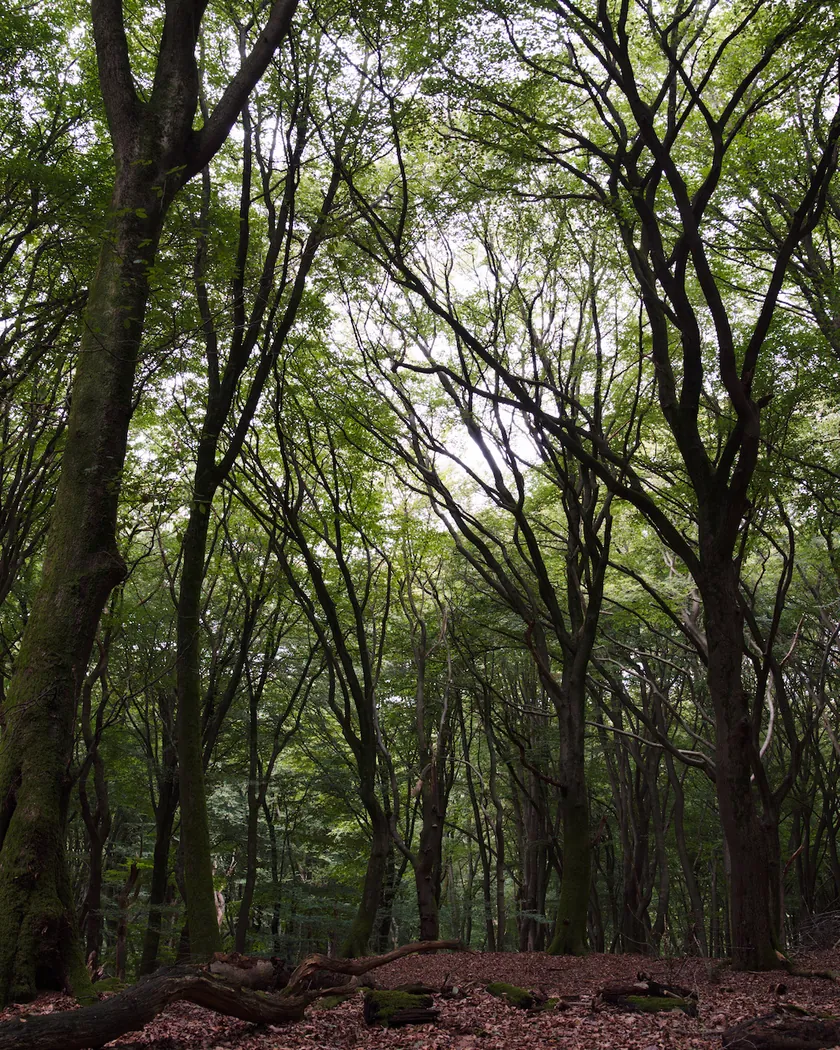
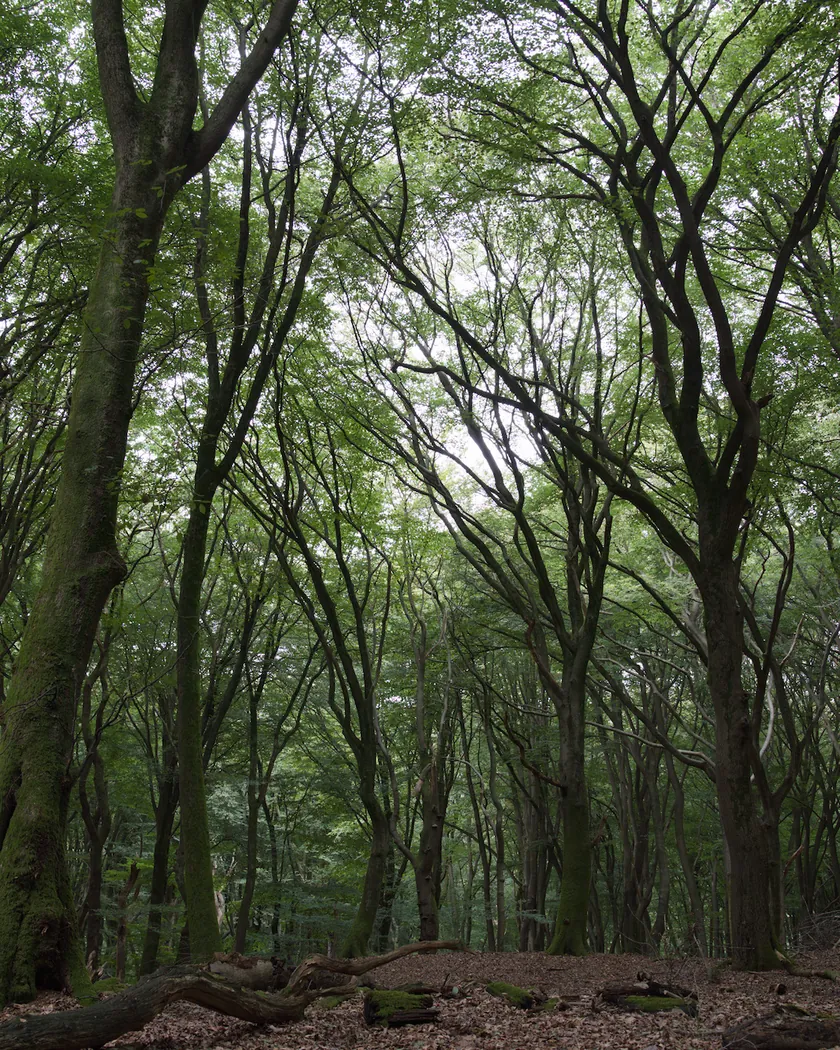
Character
- Contrast
- Fairly contrasty in reviews
- Grain
- RMS granularity 4.3 (Agfa, 2003)
- Latitude
- −1½ to +3½ stops (Agfa, 2003)
- Best for
- Bright daylight; one reviewer says it needs a lot of light
Agfa Vista 200 was an ISO 200 consumer color negative film for C-41 processing, made by Agfa-Gevaert and listed in the company’s May 2003 brochure for 135 and 110 cameras [1]. The name lived on: after Agfa-Gevaert left consumer film, Lupus Imaging & Media sold AgfaPhoto Vista Plus 200, which reviewers report was Fujifilm-made. That stock was discontinued in early 2018 [2] [5]. Most reviews describe the later stock, not the 2003 film.
Look and color
The datasheet and the reviews cover different products, so read this section with that in mind. Agfa’s only color claim is technical: its “EYE VISION” sensitization matches the film’s response more closely to the eye, intended to limit textureless reds and brown-looking greens [1]. It is a marketing argument, not a measurement.
- High saturation. Emulsive puts the film between Kodak Ektar 100 and UltraMax 400, “one of the most vivid” consumer films its author had shot in a while [8]. Casual Photophile writes of “Jolly Rancher” saturation, with blues, reds and greens beyond reality [7]. Analog.cafe reports “high-resolution crimsons” [6].
- Warmth: the reviews contradict each other. Analog.cafe calls the palette warm, with a slight purple undertone in the mid-grays and grays that shift toward teal [6]. Emulsive says it leans toward blue and green [8]. Another reviewer places it between Portra 400 and Ektar 100, neither as golden as Portra nor as punchy as Ektar [9].
- Skin tones are disputed. Casual Photophile found them “harsh, red, distracting” [7]; Emulsive found them accurate, with no shift toward pink, yellow or brown [8].
- The scanner and the batch matter. These are cheap-film reviews of stock that reportedly changed manufacturer over the years [2] [8]; no review isolates the film from the scan.
Tonality
- Contrast. Analog.cafe calls it “fairly contrasty”, with a graphic pop in microcontrast [6]. Casual Photophile describes high contrast that can swing between contrasty and muted [7]. The brochure plots density curves for the three layers, but we have not read numbers from them.
- Latitude. Agfa gives −1½ to +3½ f-stops [1]. Of the later stock, Shoot It With Film says it handles some overexposure but “definitely needs a lot of light” and struggles indoors [9].
- Long exposures. No correction from 1/10,000 s to 1 s; add one stop at 10 s [1].
Grain and sharpness
Agfa rates grain with RMS granularity (×1000), a measured value, and does not use Kodak’s Print Grain Index; the two scales cannot be compared [1].
| Film (Agfa brochure, 2003) | RMS granularity |
|---|---|
| Agfa Ultra 100 | 3.8 [1] |
| Agfa Vista 100 | 4.0 [1] |
| Agfa Vista 200 | 4.3 [1] |
| Agfa Vista 400 | 4.5 [1] |
| Agfa Vista 800 | 5.0 [1] |
- Resolving power is 130 lines/mm at contrast 1000:1 and 50 lines/mm at 1.6:1 [1].
- Reviews of the later stock: “quite sharp” [6], very fine sharpness next to Vista 400 but more grain than expected at 200 [7]; Emulsive calls the grain exceptionally fine [8]. Reviewers disagree on the amount, and they were looking at a different product.
Spectral sensitivity
The blue-sensitive layer holds a plateau near 1.8 log from about 405 to 455 nm before peaking near 471 nm, the green layer peaks near 560 nm and the red layer near 615 nm with a shoulder around 640 nm [1]. The Grain Archive style is tuned from the datasheet and the reviews; it is not computed from these curves.
Datasheet digest
| Item | Value | Source |
|---|---|---|
| ISO speed | ISO 200/24° | [1] |
| Granularity (RMS, ×1000) | 4.3 (Vista 100: 4.0; Vista 400: 4.5; Vista 800: 5.0; Ultra 100: 3.8) | [1] |
| Resolving power | 130 lines/mm at contrast 1000:1; 50 lines/mm at contrast 1.6:1 | [1] |
| Exposure latitude | −1½ to +3½ f-stops | [1] |
| Layer thickness | 18 µm | [1] |
| Reciprocity | No correction from 1/10,000 s to 1 s; +1 stop at 10 s | [1] |
| Daylight balance | 5500 K; with 80A filter for 3200 K bulbs (+2 stops) or 80B for 3400 K photolamps (+1⅔ stops) | [1] |
| Film base | Acetyl cellulose, 120 µm in 35 mm films | [1] |
| Process | AP 70 / C-41 | [1] |
| Markings | Margin marks AGFA VISTA 200-N; negative code 113-12; 3 red triangles | [1] |
Names, status and history
- Agfa-Gevaert era. The 2003 brochure lists Vista 100, 200, 400 and 800; Vista 200 came in 135 cartridges of 12, 24+3 and 36 frames and as a 110-24 cartridge [1].
- AgfaPhoto Vista Plus 200. After AgfaPhoto GmbH closed in 2005, Lupus Imaging & Media took over distribution, first selling existing stock and later, “widely believed”, Fujifilm-made film [2]. Wikipedia says Lupus sold Vista rolls made from Fujifilm-designed stock until 2018 [5]. Sources differ on the years: Emulsive dates Fujifilm supply from 2005, Ferrania before that, and calls post-2013 stock repackaged Fujifilm C200 [8].
- Fujicolor C200: reported, disputed. Kosmo Foto states that the recent Vista 200 was Fujicolor C200 relabeled [4]. Casual Photophile notes the claim as unconfirmed, and a commenter there disputes it with photographic evidence [3]. We found no statement from Fujifilm or Lupus.
- Discontinuation (2018). DPReview reported on March 12, 2018 that Vista was no longer made and stock was drying up [2]. At publication, Shoot It With Film noted it was still on sale and available only in 35 mm [9].
- Availability now. We found no current listing. Any roll you find is old stock.
Also sold as
- Fujicolor C200 (reported source of the 2005–2018 AgfaPhoto stock; disputed in comments) (reported) [4]
Alternatives
- GA — 008 Kodak Gold 200
Same speed and consumer positioning, still in production; Kodak describes a warm, golden to orange tint, where reviews of Vista 200 disagree on warmth
- GA — 009 Kodak UltraMax 400
A reviewer places Vista 200's saturation between Ektar 100 and UltraMax 400, so UltraMax is the more restrained of the two
- GA — 007 Kodak Ektar 100
The more saturated of the two Kodaks a reviewer bracketed Vista 200 with, but one stop slower
- Not on file Fujifilm C200
Press reports say the later AgfaPhoto Vista 200 stock was Fujicolor C200 under another name; the two are disputed as identical
Get the look in darktable
The GA — 056 / P preset, inspired by Agfa Vista 200, is a darktable 5.6 style of 5 native modules, with no LUT. It sits on top of your own exposure and tone mapping.
| Zone | Metric | Before → after |
|---|---|---|
| sky | C (chroma) | 27.5 → 32.3 |
| sea | C (chroma) | 22.2 → 30.5 |
| skin | C (chroma) | 16.4 → 21.5 |
Settings, all measurements and limits of the Agfa Vista 200 preset
GA — 056 / P · darktable preset
Vista 200
for darktable
See real photos
Scans of real Agfa Vista 200 film, published by others:
- Analog.cafe: Agfa Vista 200 film review, with sample scans analog.cafe
- Shoot It With Film: How to shoot Agfa Vista 200, with sample photos shootitwithfilm.com
- Casual Photophile: AgfaPhoto Vista Plus 200 film profile casualphotophile.com
Questions about Agfa Vista 200
Is Agfa Vista 200 discontinued?
Yes. DPReview reported on March 12, 2018 that Agfa Vista color negative film was no longer manufactured, citing Japan Camera Hunter. The AgfaPhoto-branded Vista stock sold up to then was reportedly made by Fujifilm. The original Agfa-Gevaert Vista 200 described in the 2003 datasheet had left the market long before.
Is Agfa Vista 200 the same as Vista Plus 200 or Fujicolor C200?
Not exactly the same film. Vista 200 is the Agfa-Gevaert product of the 2003 datasheet; AgfaPhoto Vista Plus 200 was sold later by Lupus Imaging & Media. Reviewers say the later stock was Fujifilm-made and Kosmo Foto calls it Fujicolor C200, but a commenter on Casual Photophile disputes that. It is reported, not confirmed.
Is Agfa Vista 200 good for portraits?
Reviews disagree. Casual Photophile found skin tones surprisingly poor, sometimes harsh and red, while Emulsive found skin accurate with no shift to pink, yellow or brown. Both reviewed the later AgfaPhoto Vista Plus 200, not the 2003 Agfa film, so treat them as reports on a related but different stock.
What ISO should I shoot Agfa Vista 200 at?
The box speed is ISO 200. Agfa's brochure gives a latitude of −1½ to +3½ stops. One reviewer of the later AgfaPhoto stock rated it at ISO 100 for punchier color and said it performs best in bright sun and handles some overexposure well; that is one person's practice, not a specification.
Is Agfa Vista 200 grainy?
Moderately. Agfa lists RMS granularity 4.3 for Vista 200, between Vista 100 at 4.0 and Vista 400 at 4.5. Reviews of the later AgfaPhoto stock call it not particularly grainy, though more than expected for ISO 200. RMS is a measured figure and cannot be compared with Kodak's Print Grain Index.
Sources
- 1DS Agfa-Gevaert, Technical Data: Range of Agfa standard films, F-AF-E6 (6th edition, May 2003), third-party copy
- 2C DPReview: Report: Agfa Vista film is no more, stock drying up world-wide (March 12, 2018, after Japan Camera Hunter) Accessed September 30, 2026.
- 3C Casual Photophile: Agfa Vista was more than just another color film (Jeb Inge, March 16, 2018) Accessed September 30, 2026.
- 4C Kosmo Foto: After Agfa Vista 200, the colour film we need now (Stephen Dowling, March 21, 2018) Accessed September 30, 2026.
- 5C Wikipedia: AgfaPhoto Accessed September 30, 2026.
- 6C Analog.cafe: Agfa Vista 200 film review (June 10, 2022, updated July 4, 2024) Accessed September 30, 2026.
- 7C Casual Photophile: AgfaPhoto Vista Plus 200, film profile (James Tocchio, June 16, 2017) Accessed September 30, 2026.
- 8C Emulsive: Film stock review, AgfaPhoto Vista Plus 200, 35mm format (Colin Wilson, October 14, 2015) Accessed September 30, 2026.
- 9C Shoot It With Film: How to shoot Agfa Vista 200 (Amber Vongsamphanh, April 20, 2018) Accessed September 30, 2026.
DS: datasheet · C: review or community