AgfaUltra 100
Very saturated; reds and yellows stand out, blue skies and vivid greens
- Manufacturer
- Agfa-Gevaert
- ISO
- 100
- Type
- Color negative
- Process
- C-41
- Formats
- 135
- Status
- Discontinued (2005)
- Datasheet
- F-AF-E6
- Preset
- GA — 058 / P
Status checked [2]
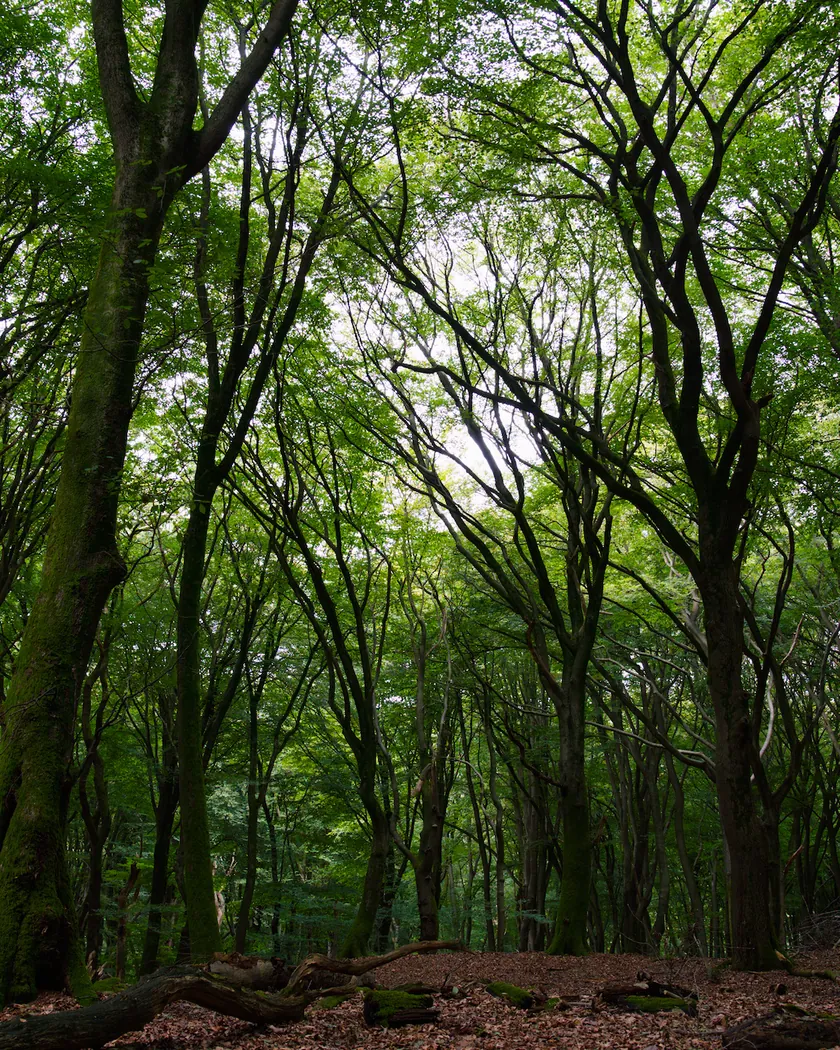
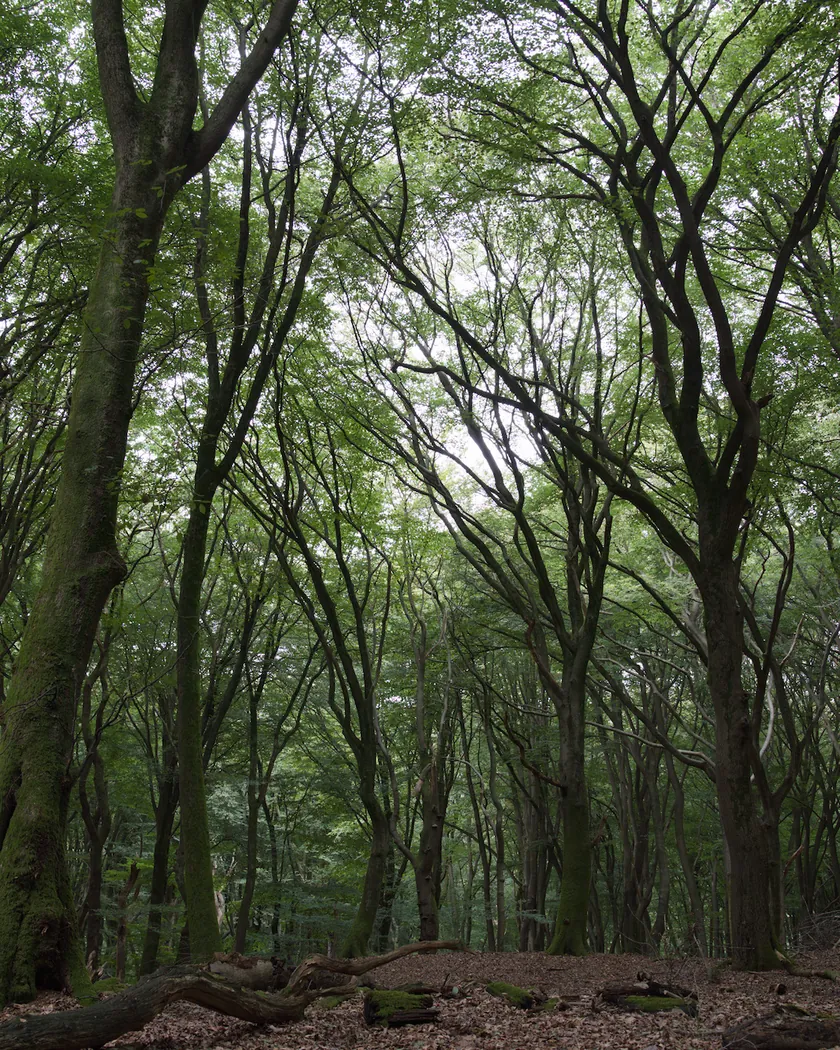
Character
- Contrast
- Fairly steep curve (slope about 0.6 in the midtones, our reading of the graph); reviews report near-black shadows
- Grain
- RMS granularity 3.8; reviews disagree on how visible it is
- Latitude
- −2 to +3 f-stops (Agfa)
- Best for
- Holiday and street color (Agfa sold it as an amateur film)
Agfa Ultra 100 is a discontinued ISO 100 color negative film for C-41 processing, made by Agfa-Gevaert and known for very strong saturation [1] [3]. Wikipedia’s list of discontinued films describes it as a consumer film with Eye Vision technology, and dates it to roughly 2001 to 2005 [2]. Martin Parr is said to have used it for his holiday and leisure reportage [3].
Look and color
- Saturation is the point of the film. Kosmo Foto calls it “exceptionally saturated”, with bright colors even on expired rolls [3]. DazB writes “very highly saturated” and adds that the colors are still faithfully reproduced [4].
- Reds and yellows stand out. “Reds are really RED” is the line 35mmc and Steve Huff’s guest reviewer both come back to [5] [6]. DazB also singles out the yellows, deep blue skies and vivid greens [4].
- Versus Ultra 50. 35mmc describes Ultra 50 as warmer and more saturated, mostly in red, and Ultra 100 as slightly less saturated and less warm [5].
- A holiday-postcard rendering. 35mmc and Steve Huff’s guest reviewer both describe an “old world”, false-color look, like a summer postcard [5] [6].
- Eye Vision sensitization. Agfa’s brochure says the film’s three sensitized layers are matched to the color perception of the human eye, which it says reduces color errors such as a green cast under fluorescent light or a red shift in some blue flowers [1]. It is not a claim about saturation, and it is the only color statement Agfa makes: the brochure gives no colorimetric data.
- Skin and color casts. None of the sources we read describes skin tones or an overall color cast.
Tonality
- Curve. On the datasheet’s characteristic curves, the green layer has a toe around −2.0 log H, then runs straight to +1.0 log H with no visible shoulder. The slope reads at about 0.6 between −1.0 and 0.0 log H (our reading of the graph) [1]. Ektar 100’s green curve reads at about 0.57 in the same region (also our reading) [7].
- Latitude. Agfa gives −2 to +3 f-stops, and the layer thickness is 25 µm [1]. Its general advice for negatives is to err toward more exposure, which it says also increases color saturation [1].
- Shadows. DazB reports shadows rendered as pure black [4], while 35mmc finds better shadow detail than on Ultra 50 [5]. Few sources discuss contrast directly.
Grain and sharpness
Agfa rates granularity as RMS × 1000 (a measurement scale, not comparable with Kodak’s Print Grain Index) [1].
| Film (Agfa datasheet, 2003) | RMS granularity |
|---|---|
| Agfa Ultra 100 | 3.8 [1] |
| Agfa Vista 100 | 4.0 [1] |
| Agfa Vista 200 | 4.3 [1] |
| Agfa Vista 400 | 4.5 [1] |
| Agfa Vista 800 | 5.0 [1] |
- Reviews contradict each other. DazB saw minimal grain [4], Steve Huff’s guest reviewer found it noticeable and part of the vintage look [6], and 35mmc says Ultra 100 is finer than Ultra 50 but that both have visible grain structure [5]. The datasheet number sides with the finer-grain reports.
- Sharpness. Agfa lists a resolving power of 140 lines/mm at contrast 1000:1 and 60 lines/mm at 1.6:1, and publishes a modulation transfer curve [1].
Spectral sensitivity
The blue-sensitive layer has a broad shoulder from about 405 to 450 nm and peaks near 470 nm, the green layer peaks near 555 nm and the red layer near 620 nm; blue and green cross near 488 nm and green and red near 577 nm [1]. The green layer falls steeply between 565 and 590 nm, so it and the red layer overlap only over a narrow band. The Grain Archive style is tuned from the datasheet and the reviews above; it is not computed from these curves.
Datasheet digest
| Item | Value | Source |
|---|---|---|
| ISO speed | 100/21° | [1] |
| Granularity (RMS × 1000) | 3.8 | [1] |
| Resolving power | 140 lines/mm at contrast 1000:1; 60 lines/mm at 1.6:1 | [1] |
| Exposure latitude | −2 to +3 f-stops | [1] |
| Layer thickness | 25 µm | [1] |
| Characteristic curve (green layer) | Toe around −2.0 log H, then a straight line to +1.0 log H with no visible shoulder; slope about 0.6 between −1.0 and 0.0 log H (read from the graph) | [1] |
| Sensitization | Eye Vision: the three layers are matched to the color perception of the human eye | [1] |
| Process | AP 70 / C-41 | [1] |
| Daylight balance | Medium daylight, 5500 K | [1] |
| Tungsten filters | 80B (+1 2/3 f-stops) for 3400 K photolamps; 80A (+2 f-stops) for 3200 K bulbs | [1] |
| DX cartridge code (135-36) | 00737 4 | [1] |
Names, status and history
- Predecessor. 35mmc describes Ultra 100 as the replacement for Ultra 50 [5]. Wikipedia’s list gives Ultra 50 as a professional film of about 1990 to 2001 and Ultra 100 as a consumer film of about 2001 to 2005, sold in 135 with 36 exposures [2].
- On sale in 2003. The May 2003 brochure lists Ultra 100 in 135-36 only, at ISO 100/21°, with the Eye Vision sensitization shared with the Vista and APS star films [1].
- End of production, sources differ. Kosmo Foto says Agfa discontinued the film around 2005 [3], DazB says 2005 or 2006, when Agfa stopped making film [4], and Wikipedia’s list ends it in about 2005 [2]. We list 2005, as reported, not as an official date.
- Scarcity. DazB calls it extremely hard to find [4]. Kosmo Foto says the rolls it found were nearly a decade past their expiry date but usable if kept frozen [3].
- No renames found. We found no verified alias or successor under another name.
Alternatives
- GA — 007 Kodak Ektar 100
The closest current film in spirit, sold by Kodak as high-saturation ISO 100 negative. Its green-layer curve reads a little shallower (about 0.57, against 0.6 for Ultra 100), both read from the graphs
- GA — 056 Agfa Vista 200
Agfa's consumer ISO 200 film in the same brochure, with Eye Vision too but coarser grain (RMS 4.3 against 3.8) and a latitude of −1½ to +3½ f-stops
- GA — 063 Agfa CT Precisa 100
Agfa's ISO 100 slide film, listed in the same brochure; E-6 process instead of C-41
Get the look in darktable
The GA — 058 / P preset, inspired by Agfa Ultra 100, is a darktable 5.6 style of 5 native modules, with no LUT. It sits on top of your own exposure and tone mapping.
| Zone | Metric | Before → after |
|---|---|---|
| sky | C (chroma) | 27.5 → 40.2 |
| sea | C (chroma) | 22.2 → 35.4 |
| skin | C (chroma) | 16.4 → 26.7 |
Settings, all measurements and limits of the Agfa Ultra 100 preset
GA — 058 / P · darktable preset
Ultra 100
for darktable
See real photos
Scans of real Agfa Ultra 100 film, published by others:
Questions about Agfa Ultra 100
Is Agfa Ultra 100 discontinued?
Yes. Kosmo Foto dates the end of production to around 2005, DazB to 2005 or 2006, and Wikipedia's list of discontinued films gives roughly 2001 to 2005 for Ultra 100. Only old stock remains, and DazB calls it extremely hard to find. Kosmo Foto found expired rolls that had been kept frozen still usable.
Is Agfa Ultra 100 the same as Agfa Ultra 50?
No. They are two films. According to 35mmc, Ultra 100 replaced Ultra 50 and is slightly less saturated and less warm, with better shadow detail and finer grain. Wikipedia's list gives Ultra 50 as a professional film of the 1990s and Ultra 100 as a consumer film with Eye Vision technology.
How saturated is Agfa Ultra 100?
Very. Kosmo Foto calls it exceptionally saturated, DazB writes 'very highly saturated' with true-looking hues, and 35mmc says the reds are really red. Agfa's brochure gives no saturation figure, only that the three layers are matched to the human eye. Reviewers also describe an old, false-color holiday-postcard look.
Is Agfa Ultra 100 grainy?
Sources disagree. Agfa lists RMS granularity 3.8, the finest of the amateur negative films in its 2003 brochure, where Vista 100 is 4.0. DazB saw minimal grain, but Steve Huff's guest reviewer found it noticeable and part of the vintage look.
What process does Agfa Ultra 100 need?
It is a color negative film developed in standard C-41 chemistry; Agfa's brochure names the compatible process as AP 70 / C-41. Any lab that still runs C-41 can develop it. Kosmo Foto says the old rolls it used were still usable after being kept frozen.
Sources
- 1DS Agfa-Gevaert F-AF-E6, Technical Data: Range of Agfa standard films (6th edition, May 20, 2003)
- 2C Wikipedia: List of discontinued photographic films (Agfa Ultra entries) Accessed September 30, 2026.
- 3C Kosmo Foto: Agfa Ultra 100 and the Olympus Trip 35 (Stephen Dowling, July 8, 2016) Accessed September 30, 2026.
- 4C DazB: Agfa Ultra 100 Accessed September 30, 2026.
- 5C 35mmc: Agfa Ultra 100 and Agfa Ultra 50 with a Contax G2 and Rolleiflex 6008i (Ibraar Hussain, May 13, 2025) Accessed September 30, 2026.
- 6C Steve Huff Photo: Film Friday, Snapping summer with Agfa Ultra 100 (Ibraar Hussain, April 18, 2014) Accessed September 30, 2026.
- 7DS Kodak Professional Ektar 100, technical data E-4046 (January 2025)
DS: datasheet · C: review or community