ADOXCHS 100 II
Orthopanchromatic black and white, sold as a 1960s look with classical grain
- Manufacturer
- ADOX Fotowerke
- ISO
- 100
- Type
- Black and white
- Process
- B&W
- Formats
- 135, 120, sheet film up to 20x24 in
- Status
- In production
- Datasheet
- Published
- Preset
- GA — 087 / P
Status checked [4]
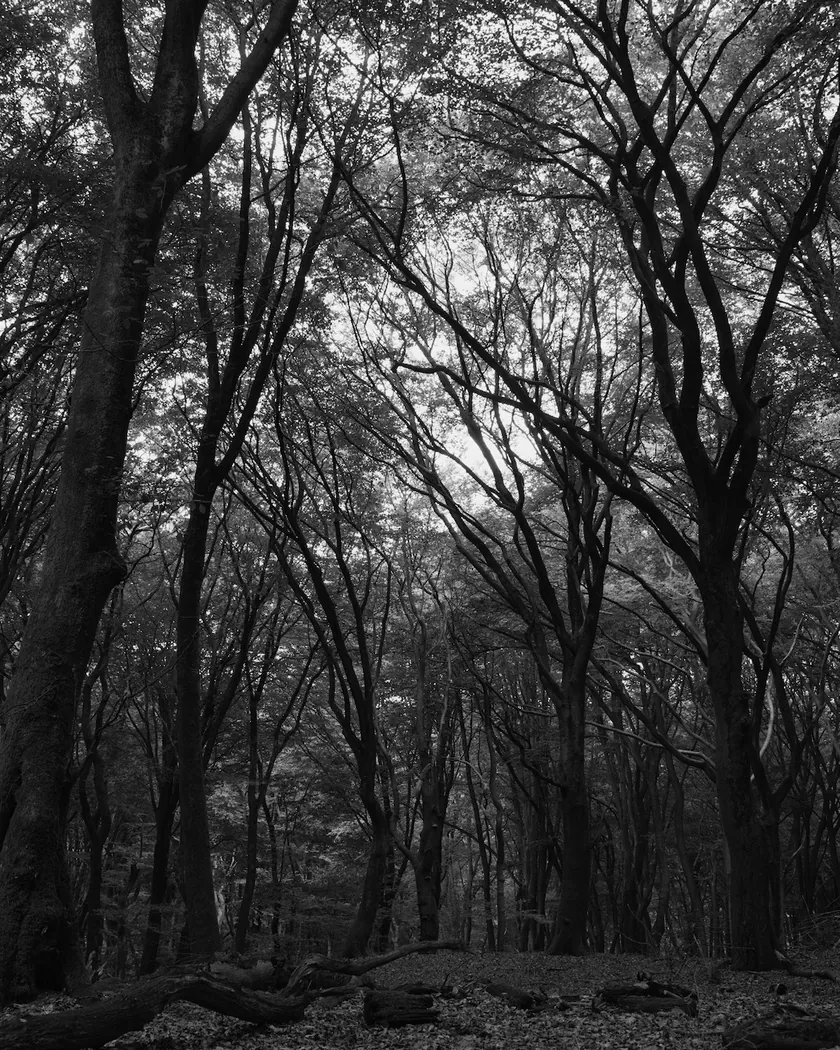
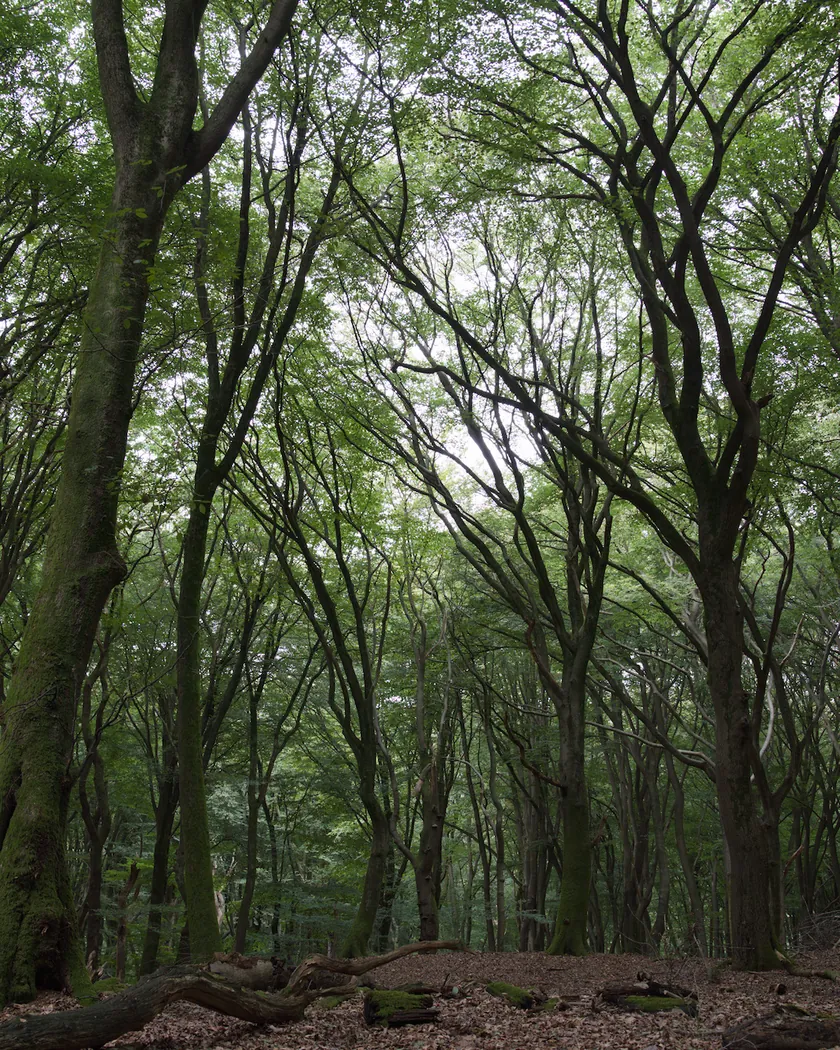
Character
- Contrast
- Medium: development times target a contrast (beta) of 0.65 (datasheet)
- Grain
- 'Classical grain'; no RMS or grain index published
- Latitude
- 'Very large exposure latitude', with a distinct highlight shoulder (datasheet)
- Best for
- Sunny scenes, per one reviewer; skies and faces separate better than on modern films (datasheet)
ADOX CHS 100 II is an ISO 100 black-and-white negative film from ADOX Fotowerke in Bad Saarow, Germany. Its emulsion is orthopanchromatic, coated in a single layer on a clear polyester (PET) base, and ADOX pitches it as a classic-looking film with “classical grain” [1]. It is sold in 35 mm, 120 and sheet film [1].
Look and color
CHS 100 II turns colors into grays according to a sensitization that differs from most modern films, and the sources disagree on what that means for skies:
- Strong blue response. The datasheet curve is highest in the violet and blue [1]. The reviewer at 35mmc reports “much greater blue sensitivity” than on panchromatic films, and expects a yellow filter to have a stronger effect [2].
- Little deep red. The curve is cut off sharply near 660 nm [1]. Fotoimpex says this gives “deeper skies with standing-out clouds” [3], a retailer’s commercial text.
- A contradiction we do not settle. Strong blue sensitivity would usually make a sky lighter, while the retailer promises deeper skies. The dip near 495 nm in the curve could explain both: pure blues render light, blue-green tones of a low sky render darker. On our test RAW files the style made a sky 5.3 L* lighter and skin 5.1 L* darker than the base render [7].
- Faces and clouds. ADOX says the film separates lips and face, clouds and sky, and water and land better than modern films [1]. Fotoimpex adds “balanced tonal reproduction in portraiture” [3].
Tonality
- Shoulder and latitude. ADOX describes “a distinct shoulder in the highlights” that prevents them from “blowing out”, and a very large exposure latitude [1]. The datasheet has no characteristic curve, so this rests on the text alone.
- Contrast is set by development. The published times target a beta of 0.65, a medium contrast. Sheet film needs about 10 % less time to reach it [1].
- Open shadows, or dull? Fotoimpex describes “delicate, soft, airy images with open shadows, creamy highlights and a smooth tonal transition” [3]. The reviewer at 35mmc found the film “duller” than FP4 Plus, with midtones less separated from highlights and shadows, better in strong sunlight than in flat light [2]. In 2013, Bruce Robbins saw “decent shadow detail” and “a good range of gutsy-looking tones” at box speed in Rodinal 1+50 [5]. The maker’s account and the reviews do not fully agree.
- Long exposures. No correction up to 1 s; from 2 s, 1.5x to 3x (3 s at 2 s, up to 45 s at 15 s) [1].
Grain and sharpness
ADOX publishes no RMS granularity and no print grain index, and no resolving power figure, so grain cannot be compared with other datasheets in a table. The sources describe it in words:
- The datasheet says “classical grain” [1]. Fotoimpex says the film has more grain than a standard ISO 100 film [3].
- At 35mmc, scans developed in Rodinal showed “more intrusive grain” than FP4 Plus. The reviewer described the difference as one of micro-contrast rather than size and suspected the developer [2].
- In 2013, Robbins called the grain “reasonable”, comparable to Agfa APX or HP5 Plus rated at ISO 200, with good sharpness [5].
- The 35 mm and 120 versions have two anti-halation layers: one between emulsion and base, and a tinted backside layer that also fights light piping and curl [1]. Retailers say this helps sharpness [6].
- Handling. PET can guide light into the cartridge, so ADOX says to protect the leader from bright light, and 120 rolls can spring open once the tape is cut [1]. Robbins saw light piping once despite the tinted layer [5].
Spectral sensitivity
The datasheet plots one curve from 400 nm to roughly 660 nm, with no vertical scale and no stated light source. It shows a high level in the violet and blue, a marked dip near 495 nm, a plateau from about 575 to 630 nm and a steep cut-off beyond 640 nm [1]. In practice, saturated blues render light, reds and oranges render dark, and the cut-off means little deep red is recorded. Because the axis is unlabeled, the exact weight between blue and red depends on assumptions we describe with the style [7].
Datasheet digest
| Item | Value | Source |
|---|---|---|
| ISO speed | 100/21° | [1] |
| Sensitization | Orthopanchromatic; two emulsions in a single coated layer | [1] |
| Base, 35 mm and 120 | Clear polyester (PET), 100 micron | [1] |
| Base, sheet film | Clear polyester (PET), 175 micron | [1] |
| Anti-halation | 35 mm and 120: layer between emulsion and base plus tinted backside layer; sheet film: backside layer only | [1] |
| Target contrast | Beta 0.65 for the published development times (sheet film: reduce times by about 10 %) | [1] |
| Development, D-76 stock, 20 °C | 6:30 min | [1] |
| Development, HC-110 dilution B, 20 °C | 5:30 min | [1] |
| Development, ADOX Adonal 1+50, 20 °C | 12:30 to 13:30 min | [1] |
| Developers not recommended | Tanning developers such as Finol, Tanol and PMK (risk of emulsion lift-off over the anti-halation undercoat) | [1] |
| Reciprocity | No correction up to 1 s; 1.5x at 2 s (3 s), 2x at 4 s (8 s), 2.5x at 8 s (20 s), 3x at 15 s (45 s) | [1] |
| Grain figure | Not published (no RMS granularity, no print grain index) | [1] |
| Characteristic curve | Not published (no D-log H graph) | [1] |
Names, status and history
- CHS 100 and CHS 100 II. 35mmc says the original CHS 100 ran into problems that led to its discontinuation, and that CHS 100 II was released in 2013 [2]. Wikipedia describes it as introduced in 2013 “as a modern coating on a polyester base”, sold out by 2016 and not reintroduced until 2018 [4]. The Online Darkroom’s first look is dated October 2013 [5].
- The classic ADOX film. Wikipedia links the ADOX name to a 1950s orthopanchromatic film, sold as Efke KB 100 until 2012 [4]. We found no source that says CHS 100 II has the same emulsion as that film, so we do not claim it.
- Status. Wikipedia lists CHS 100 II in the current range, in 135, 120 and sheet film [4]. On September 30, 2026, the Fotoimpex 35 mm page showed it sold out for mail order [3] and CineStill listed the 35 mm roll as out of stock [6]: stock varies.
- Datasheet. The one we used is dated July 11, 2024. The original ADOX link returned an error, so it is cited through a copy hosted by Fotoimpex [1].
- Reversal. ADOX says the film, sheet film included, can be reversal processed [1].
Alternatives
- GA — 020 Ilford FP4 Plus
The reviewer at 35mmc found CHS 100 II duller and more grainy than FP4 Plus, and noted its stronger blue sensitivity
- GA — 024 Fomapan 100 Classic
Another ISO 100 black-and-white film; in our styles its grain measures close to CHS 100 II (4.8 against 4.9)
- GA — 047 Kodak T-Max 100
A modern ISO 100 black-and-white film to compare against the classic sensitization of CHS 100 II
Get the look in darktable
The GA — 087 / P preset, inspired by ADOX CHS 100 II, is a darktable 5.6 style of 4 native modules, with no LUT. It sits on top of your own exposure and tone mapping.
| Zone | Metric | Before → after |
|---|---|---|
| sky | L | 55.3 → 60.6 |
| sea | L | 38.4 → 40.4 |
| skin | L | 78.2 → 73.1 |
Settings, all measurements and limits of the ADOX CHS 100 II preset
GA — 087 / P · darktable preset
CHS 100 II
for darktable
See real photos
Scans of real ADOX CHS 100 II film, published by others:
Questions about ADOX CHS 100 II
What does orthopanchromatic mean?
Orthopanchromatic is how ADOX describes the film's sensitization. On the datasheet curve it responds strongly to violet and blue, dips near 495 nm, plateaus in green and orange, and cuts off sharply near 660 nm. Deep red therefore records little, so reds and skin tones tend to render darker in gray. [1]
Is ADOX CHS 100 II still made?
Yes, it appears in the current ADOX range. Wikipedia says the film was introduced in 2013, sold out by 2016 and came back in 2018. On September 30, 2026, the Fotoimpex 35 mm page showed it sold out for mail order and CineStill listed it out of stock, so availability varies. [3] [4] [6]
Can CHS 100 II be loaded in daylight?
ADOX advises against it. The film is on a clear PET base, which can guide light into the cartridge and fog the start of the roll, and ADOX says the tinted backside layer reduces this but cannot remove it. Keep the leader out of bright light while loading, in shade or subdued light. [1] [6]
Which developers suit ADOX CHS 100 II?
The datasheet lists times for ADOX Adonal, Atomal, FX-39 and Silvermax, and for Ilford, D-76, HC-110 and XTOL, all aimed at a beta of 0.65. It does not recommend Finol, Tanol or PMK, because of the risk of emulsion lift-off. Retailers suggest Atomal, FX-39 II or Adonal. [1] [3] [6]
Is CHS 100 II grainier than FP4 Plus?
One reviewer thought so: scans developed in Rodinal showed more intrusive grain than FP4 Plus, a difference he put down to micro-contrast rather than grain size and blamed partly on the developer. ADOX publishes no RMS or grain index, so the two cannot be compared on paper. [2] [1]
Sources
- 1DS ADOX CHS 100 II B/W Film, Technical Information (July 11, 2024), copy hosted by Fotoimpex
- 2C 35mmc: Adox CHS 100 II first impressions (Geoff Chaplin, June 17, 2024) Accessed September 30, 2026.
- 3R Fotoimpex: ADOX CHS 100 II 35 mm film, product page Accessed September 30, 2026.
- 4C Wikipedia: ADOX Accessed September 30, 2026.
- 5C The Online Darkroom: Adox CHS 100 II first look (Bruce Robbins, October 17, 2013) Accessed September 30, 2026.
- 6R CineStill: ADOX CHS 100 II 35 mm, product page Accessed September 30, 2026.
- 7B The Grain Archive: ADOX CHS 100 II style, validation measurements
DS: datasheet · C: review or community · R: retailer · B: Grain Archive measurement