Kodak Tri-X 400 vs Ilford HP5 Plus
Tri-X 400 and HP5 Plus are the two classic ISO 400 black-and-white negatives. In one side-by-side test, Tri-X came out darker and more contrasty and HP5 Plus flatter, with more detail in the shadows E1; Analog.cafe also credits HP5 Plus with more shadow detail than Tri-X B6. Their grain cannot be compared on paper: Kodak publishes a diffuse RMS granularity of 17 for Tri-X, Harman no figure at all for HP5 Plus A1 B1.
- From the Kodak Tri-X 400 sheet, on Ilford HP5 Plus: “The other classic ISO 400: flatter than Tri-X and with more shadow detail in a side-by-side test”
- From the Ilford HP5 Plus sheet, on Kodak Tri-X 400: “The other classic ISO 400: more contrast in side-by-side tests, and a published RMS of 17”
Side by side
3 of 8 rows differ · 1 not published
Jump to the renderings| A Kodak Tri-X 400 | B Ilford HP5 Plus | |
|---|---|---|
| Identity | ||
| Brand Differs | Kodak | Ilford |
| Manufacturer Differs | Eastman Kodak | Harman technology |
| Type Same | Both Black and white | |
| Process Same | Both B&W | |
| ISO Same | Both 400 | |
| Formats Differs | 135, 120 | 135, 120, 4x5, 5x7, 8x10 |
Both are listed in 120 and 135. Only Ilford HP5 Plus is listed in 4×5 sheets, 5×7 sheets and 8×10 sheets. | ||
| Status Same | Both In productionchecked September 29, 2026 [A3]: source 3 of Kodak Tri-X 400 [B2]: source 2 of Ilford HP5 Plus | |
| Character | ||
| Grain Not published for B | RMS granularity 1748 µm, 1.0 above minimum density, HC-110 (B), 20 °C [A1]: source 1 of Kodak Tri-X 400 | No RMS figure published; reviews disagree on Tri-X vs HP5 |
Only Kodak Tri-X 400 has a grain figure on its datasheet. [A1]: source 1 of Kodak Tri-X 400 | ||
| Contrast | Bold, per reviews; Kodak's development times target a contrast index of 0.56 | Medium (Emulsive, quoting Ilford); reviews range from low to high |
| Latitude | One stop under at normal development; push to EI 1600 or 3200 | EI 400 to 3200 with adjusted development (Harman) |
| Resolving power | Not given (Kodak: 'high resolving power'); MTF curve published [A1]: source 1 of Kodak Tri-X 400 | Not given; no MTF curve published [B1]: source 1 of Ilford HP5 Plus |
| Reciprocity | No correction from 1/100 to 1/10 s; +1 stop at 1 s, +2 at 10 s, +3 at 100 s, with shorter development [A1]: source 1 of Kodak Tri-X 400 | No correction from 1/10,000 to ½ s; beyond, adjusted time = metered time^1.31 [B1]: source 1 of Ilford HP5 Plus |
| Look | Contrasty black and white with deep blacks and visible grain | Subtle tones and visible grain; skies lighter than the eye sees them |
| Best for | Dim light, fast action, depth of field (Kodak) | Action, documentary and available light (Ilford) |
| Datasheet and preset | ||
| Datasheet | F-4017, edition 2021-10 (PDF) | HP5 Plus Technical Information, edition 2018-11 |
| Spectral curve | Published | Published |
| Preset | GA — 003 / P · darktable and Photomator | GA — 001 / P · darktable and Photomator |
Both have a preset. | ||
Source numbers carry the film: A3 is source 3 of Kodak Tri-X 400, B3 is source 3 of Ilford HP5 Plus. Not published: none of the sources on file gives this figure.
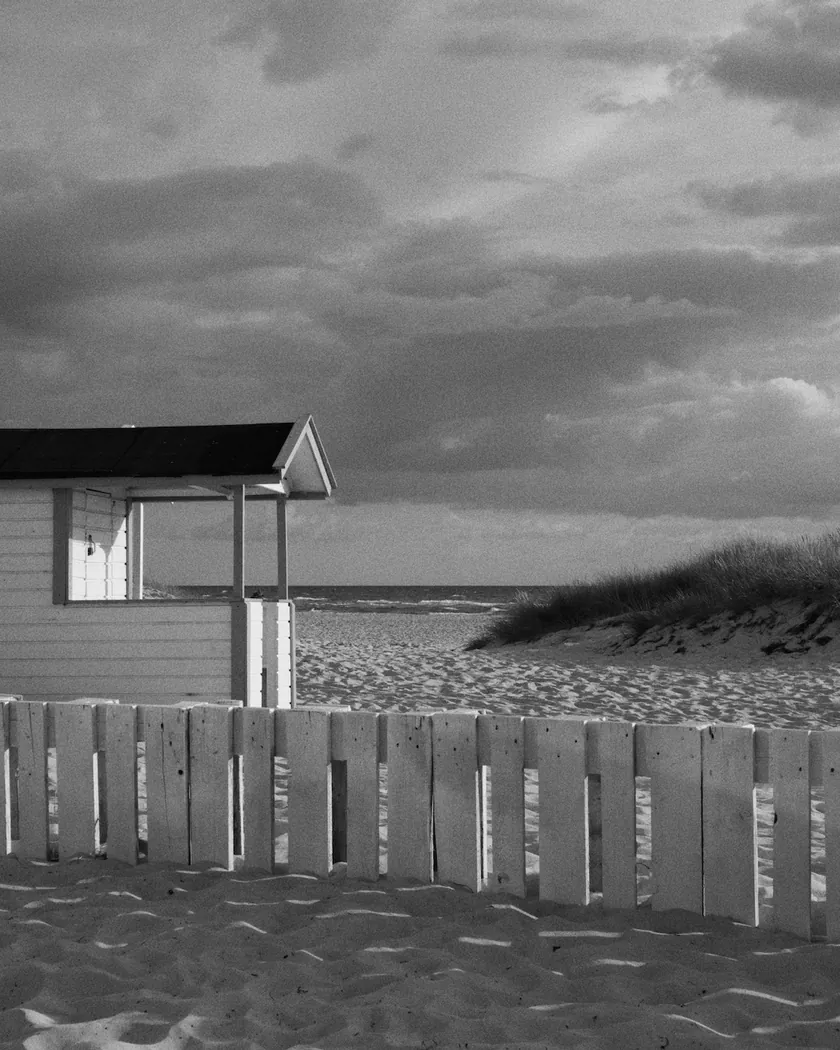
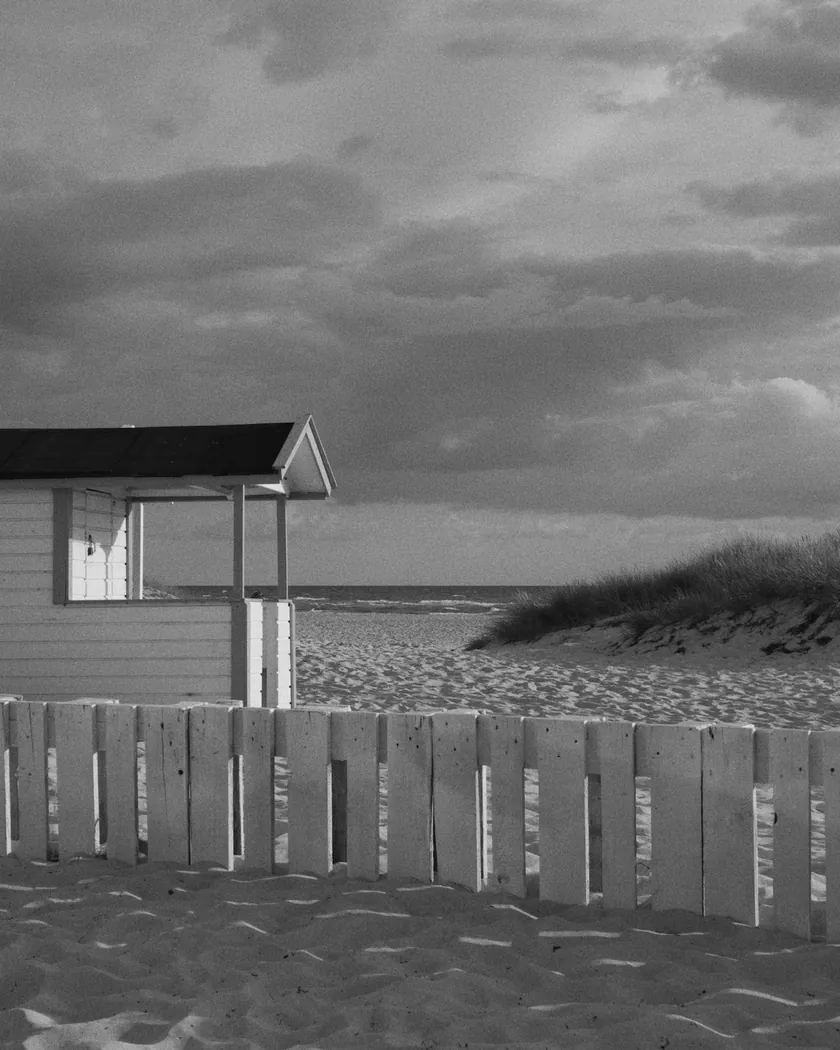

Same RAW file, two presets · rendered in darktable 5.6 · simulations on a digital RAW, not film scansDrag, tap or use the arrow keysPhoto: seume on discuss.pixls.us, CC0 1.0 · Photo credits
Both images start from the same RAW file, with the same base development: darktable’s default exposure and sigmoid. Each side then has one The Grain Archive preset applied. They show our interpretation of each film, not scans of real negatives. Real film also depends on exposure, processing and scanning.
Tonality
- Contrast. In Amy Elizabeth’s test for Shoot It With Film, “Tri-X rendered the grey backdrop a little darker and seemed to have a wider tonal range” in the studio; outdoors in diffused light, HP5 Plus and T-Max 400 were “both a little flatter than I like” E1. Emulsive gets “a medium contrast result” from HP5 Plus at box speed B5.
- Where the contrast sits. Reading the published curves, 35mmc’s Aukje concluded that “Tri-X will display more contrast in the highlights, where HP5+ will give more contrast in the shadows” B12.
- Shadows and harsh light. In the same test, HP5 Plus was “the winner again for the details in the shadows” in backlight, and in harsh light metered for the highlights, “nothing appears clipped” E1. Analog.cafe agrees that HP5 Plus shadows “retain more detail than many comparable films (including Tri-X)” B6; Casual Photophile finds that it “retains less shadow detail than other films in its segment” B7.
- Development sets the contrast. Kodak’s starting-point times for Tri-X target a contrast index of 0.56 A1, and Harman publishes a curve for HP5 Plus in one developer only B1: either film can look flatter or harder depending on the developer and the time.
Grain
- Kodak calls Tri-X’s RMS of 17 “fine” A1. Harman publishes no granularity, resolving power or MTF figure for HP5 Plus B1.
- Reviewers split. Tri-X is “much grittier/grainer” (sic) for Emulsive B5, and HP5 Plus has “a more subdued grain profile” for Analogue Wonderland B11; Analog.cafe, on the contrary, guesses “based on looks alone” that HP5 Plus is “slightly grittier than Kodak Tri-X 400” B6.
Which one for what
- Kodak publishes push times for Tri-X at EI 1600 and 3200 A1. Harman rates HP5 Plus from EI 400 to 3200 with extended development, a range it says comes from practical evaluation rather than the ISO method B1.
- HP5 Plus is also made in sheet film B1. Tri-X 400 comes in 35 mm and 120; Kodak’s sheet film is Tri-X 320, a different film A3 A1.
- The test did not settle on a favorite (“Nope”), but next time Amy Elizabeth “just might” grab Tri-X for studio work, and HP5 Plus when harsh light is expected E1.
Real film, side by side
Amy Elizabeth shot the three films in a Nikon F100, FE and N80, “all at ISO 400 and metered for shadows” except in backlight and harsh light, in seven lighting setups from a studio strobe to harsh light, then developed them and scanned them on a Noritsu LS-600 E1. Amy Elizabeth warns that the findings rest on “a very small sample size of 36 shots” E1. The Darkroom B9, Analogue Wonderland B11 and 35mmc B12 B13 have also compared the two films.
Sources
E · This comparison
- E1CShoot It With Film: B&W film stock comparisons, Kodak Tri-X vs Ilford HP5 vs Kodak T-Max (Amy Elizabeth, January 31, 2020)Accessed October 14, 2026.
C: review or community
A · Kodak Tri-X 400
- A1DSKodak Professional Tri-X 320 and 400, technical data F-4017 (October 2021)
- A3MEastman Kodak: Tri-X 400 film, product pageAccessed September 29, 2026.
DS: datasheet · M: manufacturer
B · Ilford HP5 Plus
- B1DSIlford HP5 Plus, technical information (Harman technology, November 2018)
- B2MIlford Photo: HP5 Plus 35mm, product pageAccessed September 29, 2026.
- B5CEmulsive: Film review, Ilford HP5 Plus in 35mm, 120 and sheet formats (EM, November 23, 2017)Accessed September 29, 2026.
- B6CAnalog.cafe: Ilford HP5+ film review (Dmitri, updated December 14, 2025)Accessed September 29, 2026.
- B7CCasual Photophile: Ilford HP5 Plus, black and white film profile (Josh Solomon, November 18, 2016)Accessed September 29, 2026.
- B9CThe Darkroom: Kodak Tri-X vs. Ilford HP5 (March 1, 2021)Accessed September 29, 2026.
- B11CAnalogue Wonderland: The eternal debate, Kodak Tri-X vs. Ilford HP5 Plus (Paul McKay, updated March 8, 2024)Accessed September 29, 2026.
- B12C35mmc: Ilford HP5 vs Kodak Tri-X, finding my go-to black and white film (Aukje, May 13, 2016)Accessed September 29, 2026.
- B13C35mmc: Kodak Tri-X 400 or Ilford HP5+ 400, who? when? where? (Giacomo Cecot, November 6, 2025)Accessed September 29, 2026.
DS: datasheet · M: manufacturer · C: review or community
Get the looks
GA — 003 / P · preset
Tri-X 400
for darktable and Photomator
GA — 001 / P · preset